Leaving a lasting mark: Morgridge Center bids farewell to faculty director Travis Wright
By Xai Xiong, Morgridge Center
After nearly five years of visionary leadership, Travis Wright is stepping down from his role as faculty director of the Morgridge Center for Public Service.
Wright’s commitment to community-engaged scholarship is well known across campus. A professor in the counseling psychology department, Wright is the founder/director of the BASES (Building Assets and Strengths in Early Schools) Project, a school and community-based intervention that provides resources for young, school-aged children experiencing homelessness.
His community-engaged work has exemplified his practice as an educator, researcher, author, and presenter that works shoulder to shoulder with long-term community partners.
“Serving as faculty director has been among the most meaningful experiences of my career at UW, and I am extraordinarily proud of what we have accomplished together,” Wright says.
Wright joined the Morgridge Center in 2022, during a time when the center was in the process of transitioning from the School of Education to the Division for Teaching and Learning (DTL). His tenure has been defined by a commitment to expanding civic and community engagement across UW–Madison and ensuring that community-identified priorities drive the center’s mission.
Under Wright’s leadership, the Morgridge Center reached several major milestones, including significant growth, strategic alignment, and deepened community connection:
- Strategic vision: developed and executed the Morgridge Center’s comprehensive five-year strategic plan
- Broadening access: spearheaded the rebranding of the Badger Volunteers program to ensure that all UW–Madison students can participate in public service
- Adopting a “Continuum of Service”: introduced a framework that created multiple entry points for students, meeting them where they are in their civic journeys, and fostering strong, enduring civic identities
- Responsive community programs: led a structural overhaul of the Morgridge Center’s education programs (tutoring and mentoring) to align directly with community-identified needs — marked by hiring a dedicated full-time manager and establishing these programs as a primary fundraising priority
- Strengthening partnerships: forged deep, collaborative ties with partners both on campus and throughout the broader community, serving as a powerful advocate and fundraiser for public service
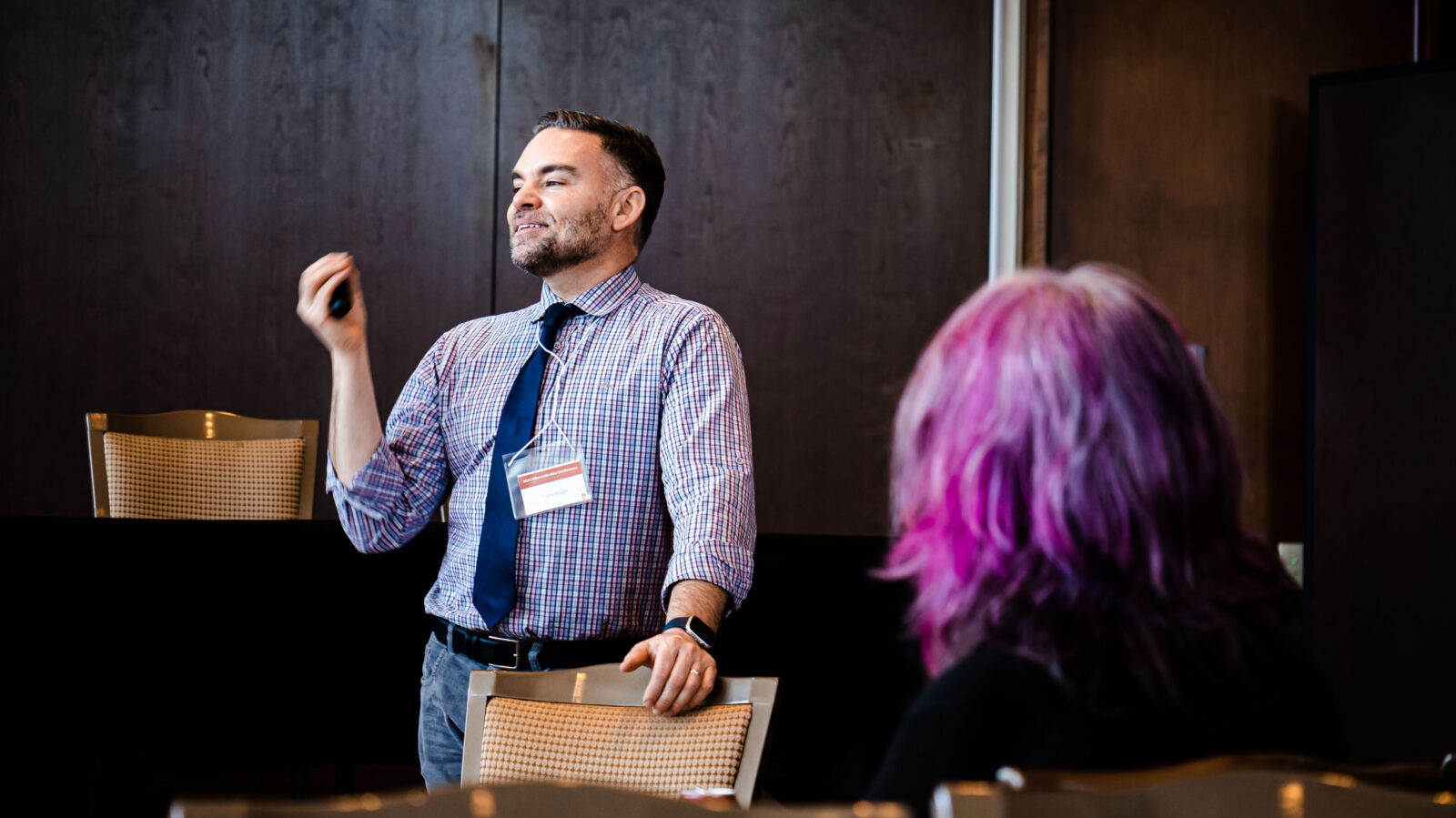
Travis Wright talks to a group of attendees at the 2023 Wisconsin Idea Conference about BASES (Building Academic, Social, and Emotional Support), a project that increases school-based and other educational supports for young children experiencing homelessness in Madison and building the capacity of schools, teachers, and families to better meet their needs.
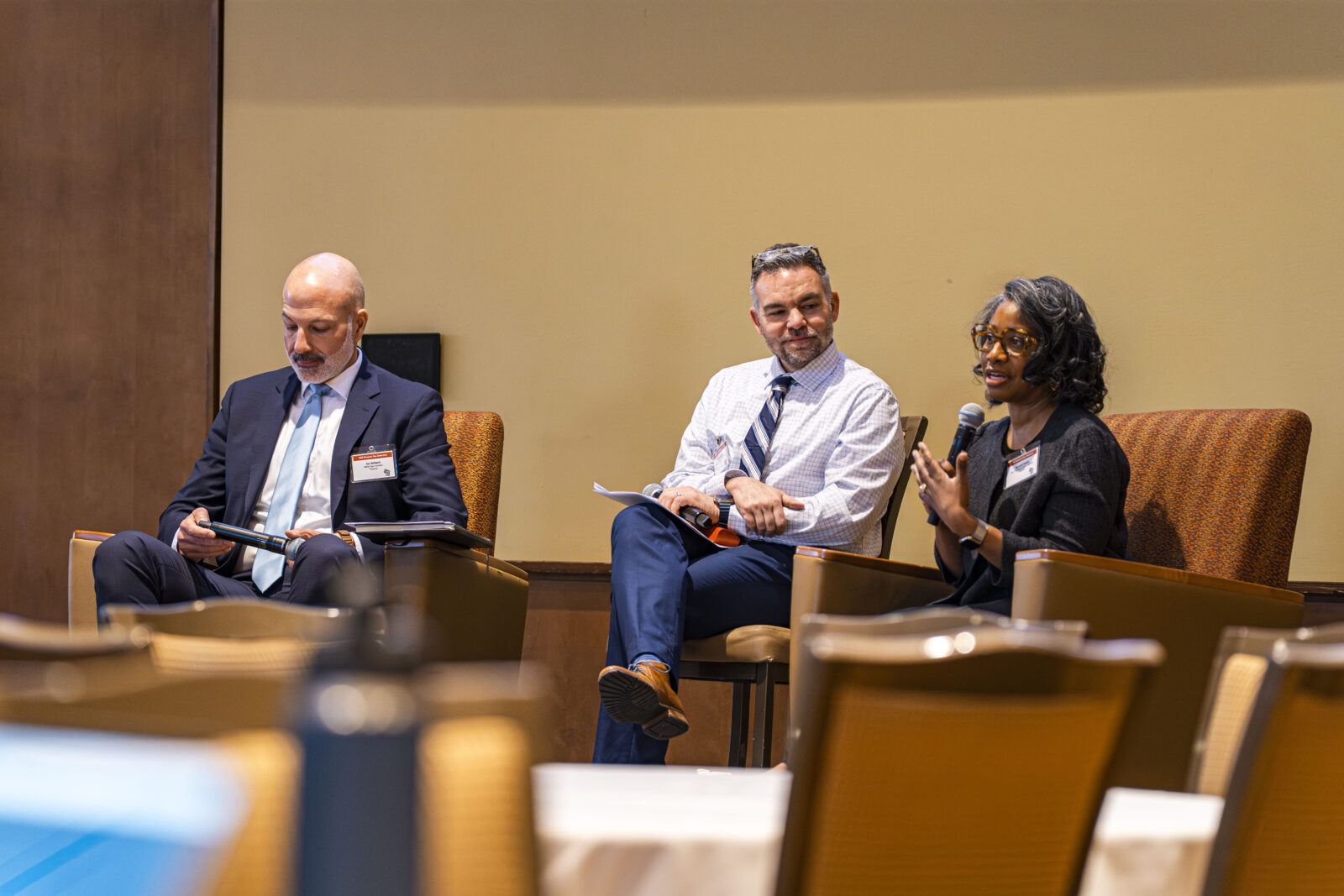
The 2024 Wisconsin Idea Conference kicked off with a fireside chat with Travis Wright (middle) as the moderator. The chat included Madison Metropolitan School District Superintendent Joe Gothard (left) and School of Education Dean Marcelle Haddix (right).
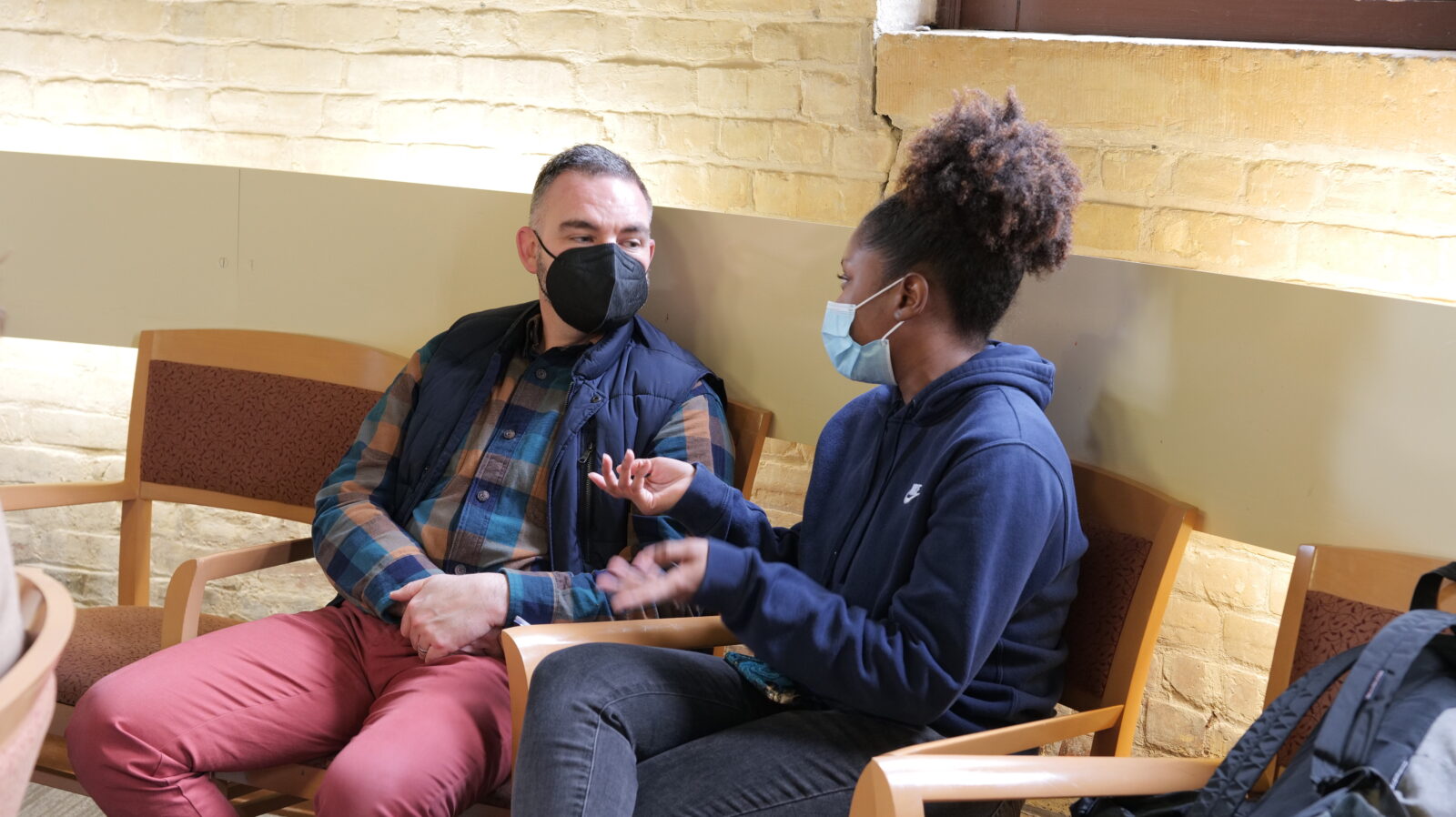
Travis Wright talking to Operations Intern Saffiatu Barrie during a Morgridge Center game night event in March 2022.
Attendees heard from Travis Wright, who impressed the importance of the work the Morgridge Center does to shape the student experience and broader Madison community, during the center’s 30-Year Celebration Event in Oct. 2025.
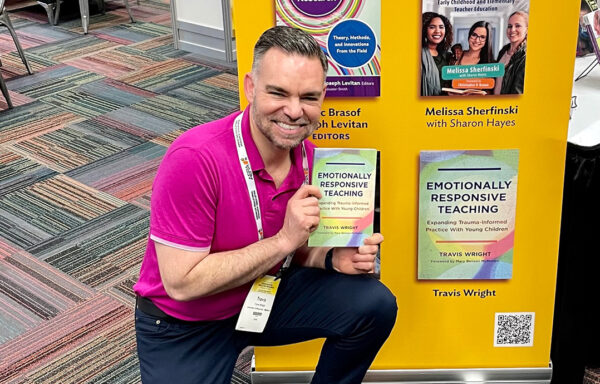
Travis Wright launched the publication of his new book, “Emotionally Responsive Teaching — Expanding Trauma-Informed Practice with Young Children,” in April 2023.
The Morgridge Center extends its immense gratitude to Wright for his extraordinary leadership and wishes him the best as he returns full time to his academic home.
When reflecting on working alongside Wright, Morgridge Center Administrative Director Lisa Chambers acknowledges his ability to understand community engagement and its benefits to college students and communities at a deep level.
“Personally, Travis has been an invaluable thought-partner, visionary, cheerleader, strategic thinker, source of levity, and a tireless advocate for the important work that we do at the Morgridge Center,” Chambers says. “Our work is his work — community is embedded in his teaching, research, and service.”
While the Morgridge Center team will deeply miss his day-to-day presence, guidance, and infectious enthusiasm — his impact on students, faculty, staff, and community members will continue to resonate for years to come.