University Theatre presents ‘Urinetown,’ a satirical comedy grounded in themes of power, privilege, and capitalism
By Amellia Fowler

University Theatre’s production of the hilarious musical satire “Urinetown” takes the stage Nov. 19-22 and Dec. 3-6 in the Ronald E. Mitchell Theatre in Vilas Hall.
Set in a city experiencing an extreme water shortage, the musical imagines a world where the government has enforced a ban on private toilets. Instead, citizens must use public amenities controlled by a single malevolent company, Urine Good Company, which profits by charging admission for one of humanity’s most basic needs.
As frustration grows, a hero emerges leading a revolt against Urine Good Company, fighting for the freedom to pee “wherever you like, whenever you like, for as long as you like, and with whomever you like.”
In the end, the battle is won — but at what cost? After all, the community’s water reserves are still depleted.
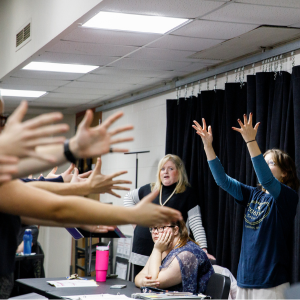
Under the direction of Audrey Lauren Standish, a teaching faculty member in the School of Education’s Department of Theatre and Drama, the story of “Urinetown” explores themes of power, privilege, capitalism, and what happens when basic human needs become commodities.
When it came to selecting this season’s productions, University Theatre Artistic Director Aly Amidei said “Urinetown” felt like a natural fit.
“In a season of all contemporary plays, ‘Urinetown’ also is built on a foundation of history… the Depression, New Deal, labor movement, etc. There’s a lot of meat in what is, superficially, a silly concept,” Amidei said. “It also speaks to the moment: the ongoing struggles of the ‘have-nots’ versus the greed and rot of the ‘haves.’”
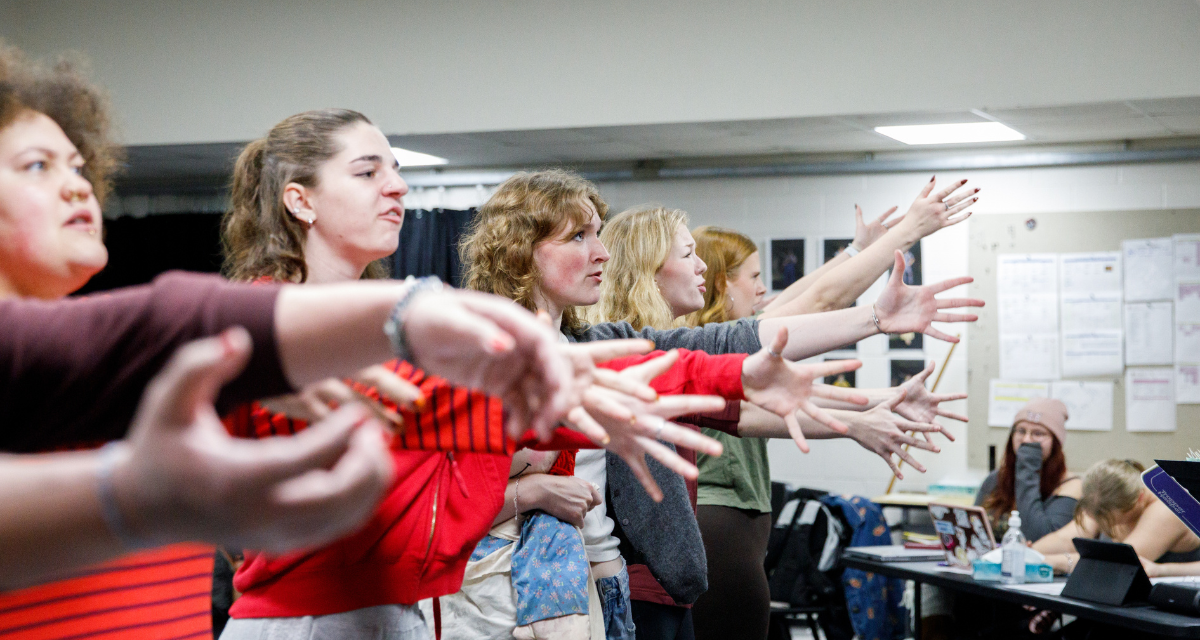
Standish has enjoyed watching the UW–Madison students who make up the cast discover the layers beneath the comedy, as performers commit to the absurd, but still ground their characters in very real circumstances.
“The humor in this play only works when the stakes are genuine,” Standish said. “I’ve watched them exploring the balance, and really enjoy watching them heighten something that’s theatrically challenging.”
Standish also highlighted several of the show’s technical elements, particularly the set, which she described as “larger than life.” She said the set, designed by Christopher Durham, plays a central role in the production.
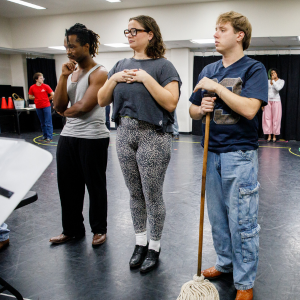
Dunham, an associate professor of theatre arts at Edgewood University, was eager to work on the project. Development of the design began in January, with Dunham and Standish collaborating closely to refine the show’s visual direction.
“This was an easy show to say yes to,” Dunham said. “Audrey and I have collaborated on many productions, and I love her direction style.”
Dunham also highlighted the expertise of the show’s technical director, Rob Wagner. “I knew the set would be in good hands with him running the build.”
The style of the set is “one clue to the world of the play,” Dunham said. With costumes and lights, a post-apocalyptic idea emerges, “as though we veered off on a different timeline after the Great Depression.”
“It’s sardonic fun,” Dunham said. “It’s dingy and rusty, but also curvy with a whimsy to it. The things it hides will be revealed in time, so just enjoy it.”
Standish also praised costume designer Rebecca Jacobs, whose period-specific 1930s designs emphasize the production’s stark socioeconomic divide.
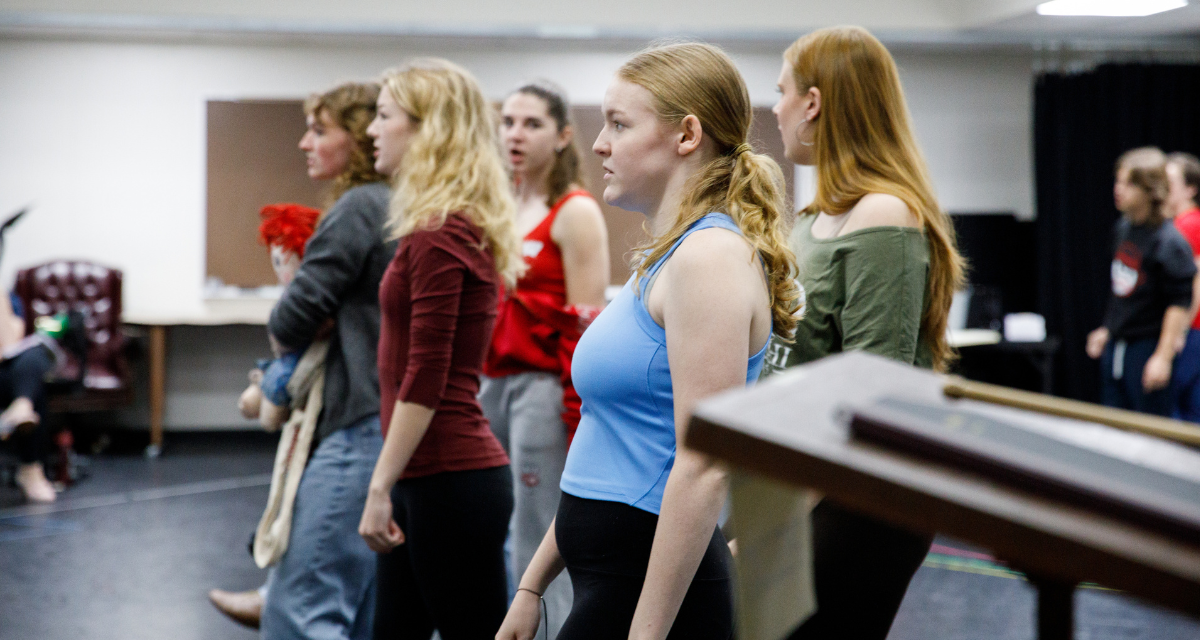
Actor AJ Stoffels, a senior majoring in theatre and drama (acting option) and communication arts (radio-television-film) with a certificate in digital cinema production, plays the role of Little Sally in the production. In an interview, she reflected on what the role has meant to her.
“I have the sap-factor since this is my last show at UW,” Stoffels said, “but I am also finding myself incredibly grateful for the opportunity to apply the things that I have learned and am continuing to learn — about acting as well as about myself as an actor.”
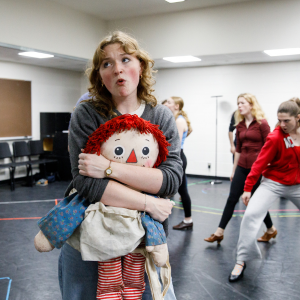
Within the world of “Urinetown,” Little Sally brings intelligence and honesty to the story, Stoffels said, giving audiences a point of view that is “refreshing” and “grounded in innocence.”
“She is a vehicle for getting information across to the audience when all the characters are too secretive or protective to do so.”
Reflecting on her time with University Theatre, Stoffels described performing in an academic setting as “one of the most fruitful learning experiences that an actor can get.” Having appeared in nearly 30 shows, including six with University Theatre, she encourages students “to take advantage of the professionals around you who are passionate about teaching their skills to students, and fully utilize the academic environment to take risks and learn in a supported space.”
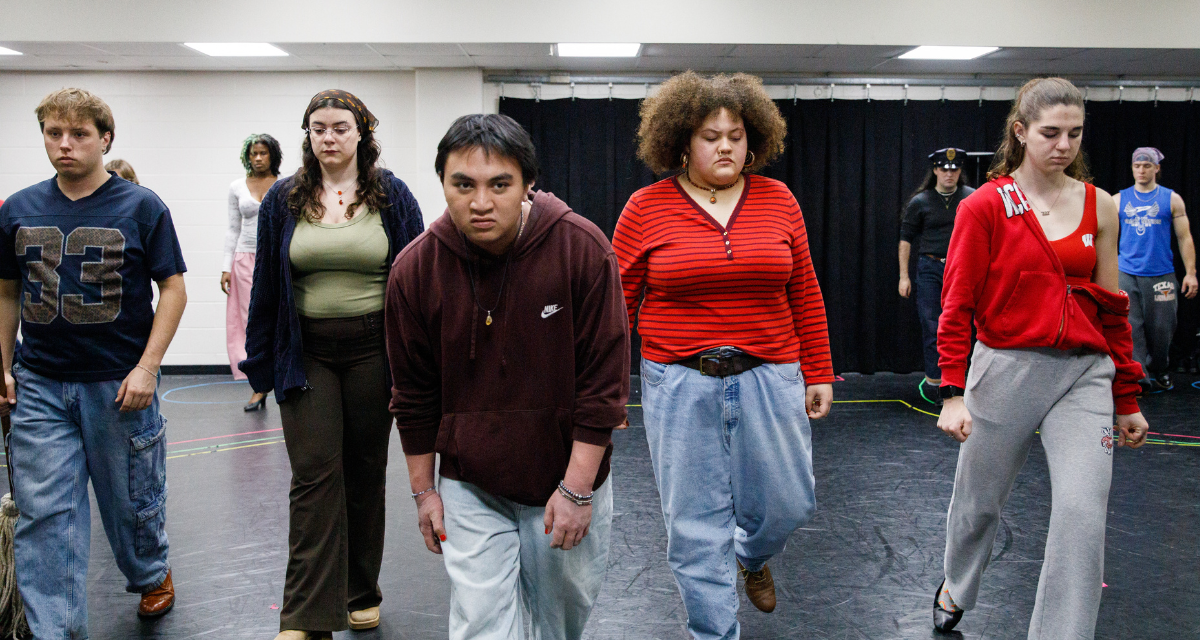
With “outrageous” characters guiding viewers through the story, Standish hopes audiences will come to the Mitchell Theatre ready to laugh, be surprised, and embrace the show’s unique blend of comedy and social commentary.
Just don’t expect a traditional happy ending: “What I love about ‘Urinetown’ is that it doesn’t necessarily promise that to people,” says Standish. “Instead it promises that love, rebellion, and good intentions will always save the day.”
To buy tickets, visit artsticketing.wisc.edu or call 608-265-2787.