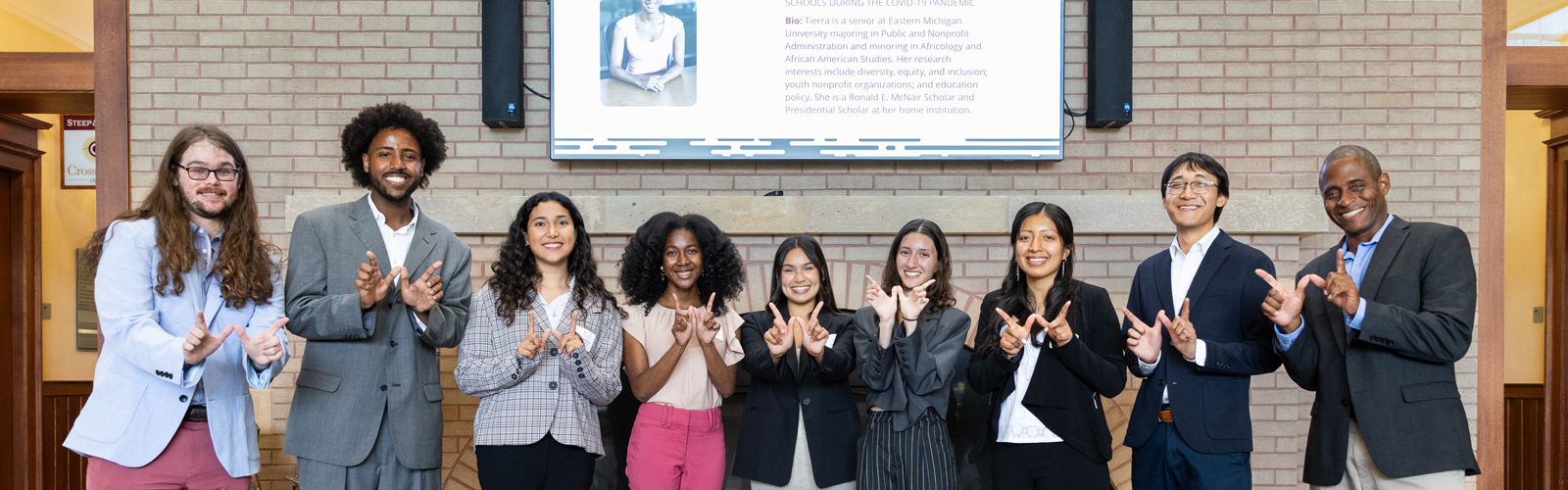
SERP Mentors are recruited from within departments in the School of Education and the Wisconsin Center for Education Research (WCER). Their projects and focus areas represent a wide variety of disciplines, topics, and issues in the Arts, Education, and Health Sciences. The mentoring that faculty/research associates provide for SERP Scholars is invaluable and connects students with cutting-edge research, practice, and relevant experiences that make them highly sought after when pursuing graduate studies. Below you will find current faculty/research associates who have committed to being a SERP Mentor for Summer 2026. When available, we have also included potential research projects, labs, etc.
Please note there is no guarantee of a particular match with SERP Mentors and projects are subject to change. As we add other SERP Mentors, they will be available here. We also encourage you to visit the School of Education and WCER websites to find other potential mentors and identify them in your application if they are better aligned with your interests. Additionally, mentors and projects are continuously being added for summer 2026. Please check this list regularly throughout the application process for more research options. If you have any questions, contact Maame Adomako at maame.adomako@wisc.edu.

Aireale J. Rogers
Department: Educational Leadership Policy and Analysis (Higher Education Program)
Projects: Designing for Pedagogical Change is an NSF-funded design based research project exploring organizational learning and pedagogical change in STEM academic departments. Through the development and implementation of a year-long, intergenerational community of practice across three earth science departments, we aim to generate empirical insight about promising pedagogical practices that support an increasingly diverse discipline.
Research Interests: Drawing from work in the learning sciences and critical race studies, Dr. Rodgers and her research team, the Racialization in Learning Environments (RILE) Collective, use qualitative techniques to examine the social organization of racialization in postsecondary teaching and learning. With a gaze toward faculty development, classroom teaching and learning, and systemic change in educational organizations, Dr. Rodgers provides critical insight into how faculty and students’ (mis)understandings of race and racism shape learning across higher education ecologies.
SERP Involvement: The SERP fellow working with Dr. Rodgers and our interdisciplinary research team will support ethnographic data collection and video analysis of our Summer Change Institute, a two-day workshop aimed at helping departments redesign an aspect of their curriculum to better meet their students' needs and departmental learning priorities.

Andy Garbacz
Department: Educational Psychology
Research Interests: Centering and elevating family and youth voice in school and community mental health.
SERP Involvement: Collecting or synthesizing data, analyzing data, and disseminating project findings in publications and presentations.

Brittany Travers
Department: Kinesiology
Lab: The Travers Lab, housed at the Waisman Center, focuses on (1) exploring human movement and its dynamic complexity in neurotypical and neurodivergent individuals, (2) investigating how the brain contributes to sensory and motor differences across maturation, learning, and experience, and (3) examining how motor skills shape participation in meaningful activities.
Research Interests: The intersection of sensorimotor skills and neurobiology among individuals on the autism spectrum. Dr. Travers' research combines brain imaging with quantitative measures.
SERP Involvement: SERP Scholars may assist the lab with (1) running school-aged participants through motor, neuropsychology, and neuroimaging assessments in National Institutes of Health-funded studies, (2) analyze behavioral and brain data to examine brain-behavior links, and/or (3) work with data exploring sensory and motor differences in autistic individuals.
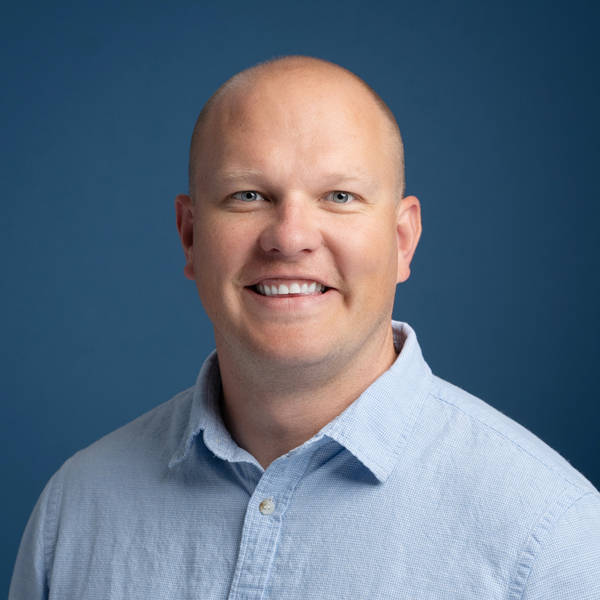
Christopher Sundberg
Department: Kinesiology
Lab: Integrative Muscle Physiology & Energetics (IMPE) Laboratory
Research Interests: The IMPE lab investigates the fundamental biology of skeletal muscle fatigue and the physiological processes that limit human neuromuscular performance across the adult lifespan. This research is important because, without a mechanistic understanding, interventions — such as exercise training programs to enhance neuromuscular function or therapies to mitigate the detrimental effects of muscle weakness and fatigue in clinical populations (e.g., elderly, diabetes, stroke, respiratory and heart failure, COPD, multiple sclerosis) — are formulated in the absence of empirical evidence. The lab’s approach is innovative because we incorporate multiple state-of-the-art techniques to study muscle weakness and fatigue in the whole muscle down to the cellular and molecular levels. Our goal is to develop a comprehensive mechanistic understanding of these phenomena, which will enable us to create novel interventions aimed at improving muscle power output, size (hypertrophy), and fatigability in both healthy and clinical populations, ultimately extending human health-span.
SERP Involvement: Collecting, analyzing, and synthesizing data related to skeletal muscle size and function in humans across the lifespan.
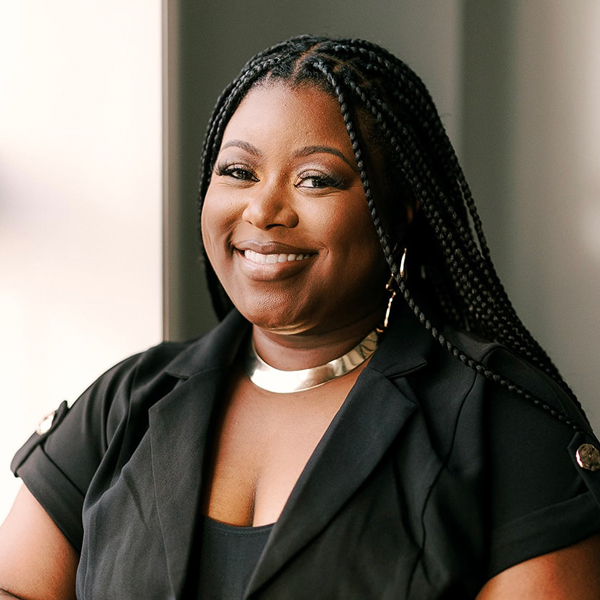
Deja Mason
Department: Wisconsin Center for Education Research
Project: CALL for Equity-Centered Leadership (CALL-ECL) focusing on the design and documentation of new equity-centered programs and systems and developing data systems and tools to support the preparation of equity-centered school leaders.
Research Interests: CALL-ECL Survey Development, Social Network Analysis, Design & Implementation Mapping, Mapping Equity Indicators (MEI).
SERP Involvement: Collaborating with the CALL-ECL team to: Validate and share a new equity-centered version of the CALL survey to measure and support new forms of principal leadership in the ECPI schools and beyond, Analyze artifacts, interviews, focus groups, and observations to describe the design and implementation of the new ECPI programs and systems. Collect available public data and develop querying and visualization tools for educators.
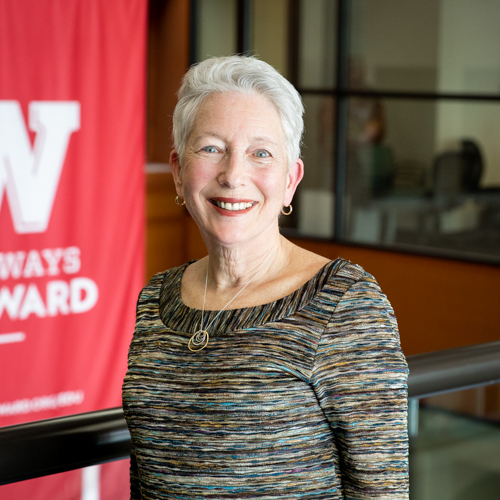
Dorothy Farrar Edwards
Department: Kinesiology
Lab: Collaborative Center for Health Equity (CCHE) in the UW School of Medicine and Public Health
Research Interests: Dr. Dorothy Edwards’ research focuses on understanding the needs and characteristics of cognitively impaired minority and medically underserved urban older adults. Her work examines strategies to improve recruitment and retention of minority elders and their families in longitudinal studies related to Alzheimer’s disease and stroke. She also leads the development and testing of innovative measures to identify adults at risk for difficulty performing complex activities of daily living.
SERP Involvement: SERP Scholars may work with a team of occupational therapy researchers and students to examine various health and daily living challenges.
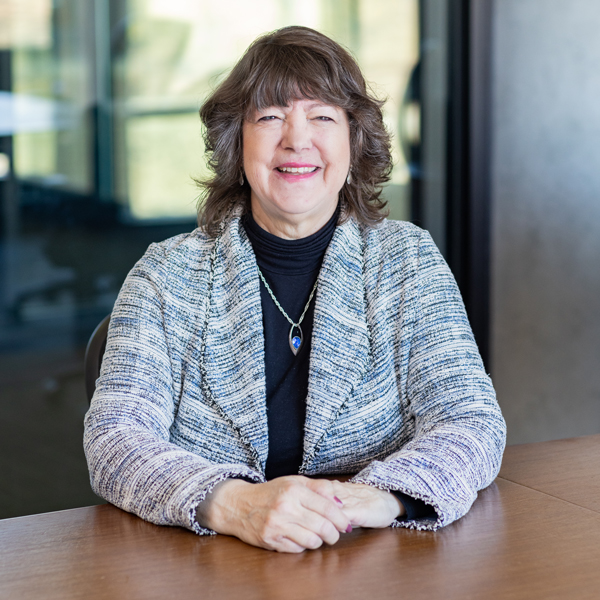
Elizabeth Larson
Department: Kinesiology
Lab: Lab for the Study of Occupation
Research Interests: Currently, we are working on wellness promotion for middle school by developing an outdoor space that’s designed by students to meet their wellness needs. We are also doing the same for high school students by developing a “Living Well” course that promotes positive lifestyle change. We are developing several assessment tools — one that can be used to assess children’s executive functioning skills and another for children with disabilities to select the desired activities they would like to do (child-directed goals for occupational therapy intervention).
SERP Involvement: SERP Scholars may work with collected data from these projects to answer key questions the lab is examining or may create accessible summaries of well-being research on adolescents that can be used in the Living Well Course.

Haley Vlach
Department: Educational Psychology
Lab: Learning, Cognition, and Development Lab
Research Interests: Dr. Vlach’s research examines the mechanisms underlying children’s learning in order to (1) understand cognition and how cognition develops, and (2) build an empirical base for the design of successful educational and health interventions. Her work spans cognitive and developmental processes: memory, memory development, word and category learning, concept learning, conceptual development, inductive learning and generalization/transfer of learning.
SERP Involvement: SERP Scholars will work on a variety of projects where they will construct visual and written stimuli for experiments; recruit schools to participate in studies; conduct data collection with children in preschools and summer camps; organize and code data; and/or attend project meetings with collaborators. SERP Scholars will work closely with current PhD students and Dr. Vlach.
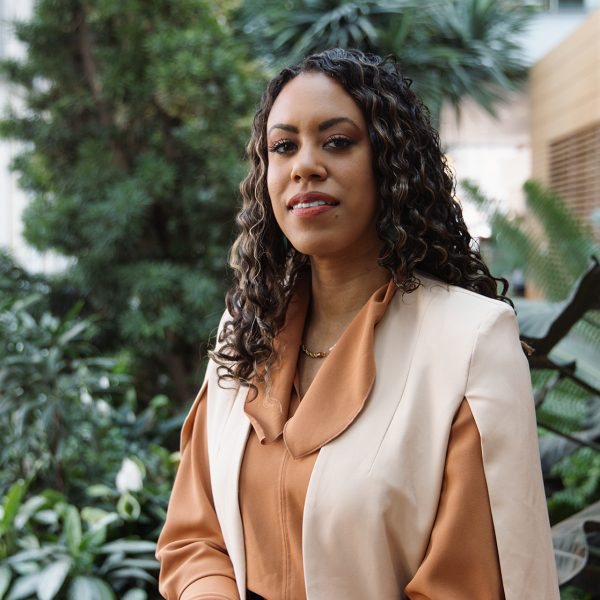
Jessica Lee Stovall
Department: African American Studies and affiliate of the Curriculum and Instruction and Education Policy Studies Departments in the School of Education.
Project and Lab: Qualitative, community-based research with The Center for Black Excellence and Culture in Madison, including preliminary research and development of a future Black Freedom School through her lab, The SoulFolk Collective.
Research Interests: The intersection of Black studies and education, focusing on how Black-affirming educational spaces are created and sustained.
SERP Involvement: Collaborating with The SoulFolk Collective on ethical community-based research, preparing for the opening of the Freedom School, archival research on Freedom Schools, curriculum development, semi-structured interviews with students and community members, and dissemination of findings in conferences and possible publications.

Joelle Taknint
Department: Counseling Psychology
Project: Dr. Taknint is building a research lab focused on migrant mental health equity, which will launch officially in January.
Research Interests: Investigating systems (i.e., health care, immigration) and structures (i.e., discrimination) that drive health inequities to inform multi-level interventions for and with migrant communities. In addition to health care system redesign, she is interested in community-based and co-designed mental health interventions and adaptations of existing evidence based mental health interventions for local care settings.
SERP Involvement: Dr. Taknint will be undertaking a local needs assessment on migrant mental health care to inform the direction of her research lab. The SERP student will be involved in data collection (i.e., interviewing), interview transcription, and will receive an introduction to qualitative data analysis. The student will also receive mentorship in conducting a literature review and critique. The student will have the opportunity (as desired) to participate in conference presentations and/or publications that stem from this work (though these would be beyond the conclusion of SERP).

Kevin Henry — Educational Leadership and Policy Analysis
Dr. Henry is an Associate Professor in the Department of Educational Leadership and Policy Analysis at the University of Wisconsin–Madison. His interdisciplinary scholarship revolves around the intersections of school choice/market-based approaches to education—specifically charter schools and the charter school authorization process; political economy; the politics of education; anti-Blackness; educational justice; and Black educational imaginaries. More specifically, Dr. Henry’s research examines how the persistence of anti-Blackness and white supremacy shapes Black peoples’ educational experiences and how the perspectives and practices of Black educational actors can reshape and transform the field of education to be more just and equitable.

Nick Hillman
Department: Education Leadership and Policy Analysis
Lab: Dr. Hillman directs the Student Success Through Applied Research (SSTAR) Lab. Current projects include evaluations of the Teacher Pledge, Wisconsin Tuition Promise, and All-In Milwaukee and an investigation into how rural high school students make decisions about going to college.
Research Interests: The links between finance, policy, and college opportunity. Dr. Hillman and his research team put research into action through a research-practice partnership with UW–Madison's Division of Enrollment Management.
SERP Involvement: Collecting, synthesizing, managing, or analyzing data related to issues of financial aid and college access/student success.

Percival Matthews — Educational Psychology
Department: Educational Psychology
Lab: Math Education Learning & Development Lab
Research Interests: Dr. Matthew's research interests focus on the ways people learn about math and numbers.
SERP Involvement: SERP Scholars' involvement with his lab will revolve around one of the following:
(1) An NSF-funded project exploring how different conceptions of the equal sign relate to children’s algebraic thinking. (2) An NSF-funded project exploring connections between fractions knowledge and algebra knowledge. (3) A variety of projects exploring learning about fractions, with a special emphasis on how the human perceptual system might be used to help students understand the sizes of symbolic fractions.
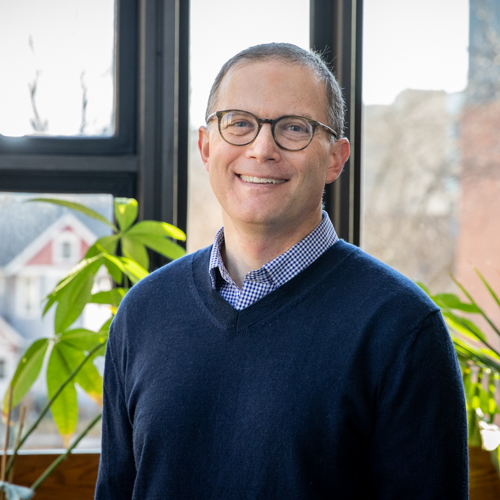
Peter Wardrip
Department: Curriculum and Instruction
Project: Dr. Wardrip leads research in museums. He studies the design of hands-on experiences as well as develops tools to evaluate exhibits and activities in the museum.
Research Interests: Designing hands-on learning experiences, practical measurement, and professional learning
SERP Involvement: Collecting, synthesizing, managing, or analyzing data related to visitor experiences in the museum. Also, attending meetings with museum professionals.

Shamya Karumbaiah
Department: Educational Psychology
Project: Investigating how effective the use of generative AI is in supporting and understanding translanguaging in classrooms.
Research Interests: Dr. Karumbaiah is interested in recognizing and engaging with multilingual students’ ideas expressed in non-dominant ways — which is important to support their learning and identity development. Translanguaging, or the fluid and dynamic movement across named languages, is one of the non-dominant ways in which multilingual learners communicate, make meaning and connect with others.
SERP Involvement: SERP Scholars may conduct design studies with teachers and students, collecting and analyzing authentic learning data, reviewing literature and building and testing educational AI systems. It is preferred but not required for the SERP scholar on this project to be bilingual in Spanish and English.
Previous SERP Mentors
This is an accordion element with a series of buttons that open and close related content panels.
2025
Dorothy Edwards, Kinesiology
Andy Garbacz, Educational Psychology
Shamya Karumbaiah, Education Psychology
Aireale Rodgers, Educational Leadership and Policy Analysis
Sarah Short, Educational Psychology
Walter Stern, Educational Policy Studies
Jessica Stovall, Curriculum and Instruction/African American Studies
Brittany Travers, Kinesiology
Haley Vlach, Educational Psychology
2024
Taylor Odle, Educational Policy Studies
Diego Román, Curriculum and Instruction
Chris Saldaña, Educational Leadership and Policy Analysis
Matthew Wolfgram, Wisconsin Center for Research
Shamya Karumbaiah, Education Psychology
Aireale Rodgers, Educational Leadership and Policy Analysis
Haley Vlach, Educational Psychology
Percival Matthews, Educational Psychology
Walter Stern, Educational Policy Studies
2023
Andy Garbacz, Educational Psychology
Hailey Love, Rehabilitation Psychology and Special Education
Percival Matthews, Educational Psychology
Haley Vlach, Educational Psychology
Erica Turner, Educational Policy Studies
Diego Roman, Curriculum and Instruction
Nicholas Hillman, Educational Psychology
Mitch Nathan, Educational Psychology
2022
Diego Roman, Curriculum & Instruction
Alberta Gloria, Counseling Psychology
Luis Columna, Kinesiology
Brittany Travers, Kinesiology
Analee Good, WCER
Andy Garbacz, Educational Psychology
Stephen Quintana, Counseling Psychology
Percival Matthews, Educational Psychology
Haley Vlach, Educational Psychology
2021
Brian Burt, Educational Leadership & Policy Analysis
Katie Eklund, Educational Psychology
Dorothy Farrar-Edwards, Kinesiology
Andy Garbacz, Educational Psychology
Alberta Gloria, Counseling Psychology
Erica Halverson, Curriculum & Instruction
Mollie McQuillan, Educational Leadership & Policy Analysis
Diego Román, Curriculum & Instruction
Simone Schweber, Curriculum & Instruction
Xueli Wang, Educational Leadership & Policy Analysis
2020
Katie Eklund, Educational Psychology
Andy Garbacz, Educational Psychology
Percival Matthews, Educational Psychology
Mitchell Nathan, Educational Psychology
2019
2018
2017
Erika Bullock, Curriculum & Instruction
Erica Halverson, Curriculum & Instruction
John Hitchcock, Art
Gloria Ladson- Billings, Curriculum & Instruction
Stacey Lee, Education Policy Studies
Kristen Pickett, Kinesiology
Francois Tochon, Curriculum & Instruction & Weijia Li, Curriculum & Instruction
2016
Melissa Braaten and John Rudolph,
Carl Grant, Curriculum & Instruction
David Shaffer, Educational Psychology
Erica Turner, Education Policy Studies
Kimber Wilkerson, Rehabilitation Psychology & Special Education
2015
Aydin Bal, Rehabilitation Psychology & Special Education
Alberta Gloria, Counseling Psychology
Gloria Ladson- Billings, Curriculum & Instruction
Kimber Wilkerson, Rehabilitation Psychology & Special Education
2014
Bianca Baldridge, Educational Policy Studies
Peter Goff, Educational Leadership & Policy Analysis
Gloria Ladson- Billings, Curriculum & Instruction
2013
Alberta Gloria, Counseling Psychology
Gloria Ladson- Billings, Curriculum & Instruction
Mariana Pacheco, Curriculum & Instruction
Stephen Quintana, Counseling Psychology
Bill Schrage, Kinesiology
Kimber Wilkerson, Rehabilitation Psychology & Special Education
2012
Brad Brown, Educational Psychology and Amy Bellmore, Educational Psychology
Michael Fultz, Educational Policy Studies
Beth Graue, Curriculum & Instruction
Stacey Lee, Educational Policy Studies
Stephen Quintana, Counseling Psychology
John Witte, Political Science & Public Affairs
2011
Michael Fultz, Education Policy Studies, and Stacy Lee, Education Policy Studies
Gloria Ladson- Billings, Curriculum & Instruction
Carmen Valdez, Counseling Psychology
2010
2009
Alberta Gloria, Counseling Psychology
William Hoyt, Counseling Psychology
Gloria Ladson- Billings, Curriculum & Instruction
Stephen Quintana, Counseling Psychology
Bruce Wampold, Counseling Psychology
2008
Michael Fultz, Educational Policy Studies
Alberta Gloria, Counseling Psychology
Carl Grant, Curriculum & Instruction
2007
Alberta Gloria, Counseling Psychology
Carl Grant, Curriculum & Instruction
Pamela Oliver, Sociology
2006
James Gee, Curriculum & Instruction and Kurt Squire, Curriculum & Instruction
Alberta Gloria, Counseling Psychology
2005
Alberta Gloria, Counseling Psychology
Stephen Quintana, Counseling Psychology
Michael Fultz, Educational Policy Studies Mary Metz, Educational Policy Studies
2004
Alberto Cabrera, Educational Leadership & Policy Analysis
Hardin Coleman, Counseling Psychology
Michael Fultz, Educational Policy Studies
Carl Grant, Curriculum & Instruction
Tom Popkewitz, Curriculum & Instruction
Jim Stewart, Curriculum & Instruction
2003
Michael Fultz, Educational Policy Studies
Michael Olneck, Educational Policy Studies
Stephen Quintana, Counseling Psychology
2002
Alberta Gloria, Counseling Psychology
Michael Fultz, Educational Policy Studies
Beth Graue, Curriculum & Instruction
Jacob Stampen, Educational Leadership & Policy Analysis