New report identifies teacher expertise and funding as critical to multilingual learner success
By Katie Grant, Office of Research & Scholarship
As schools across the United States serve growing numbers of multilingual learners, a new report co-authored by faculty in the UW–Madison School of Education points to two factors that can help improve student outcomes: stronger educator preparation and funding systems that closely reflect student needs.
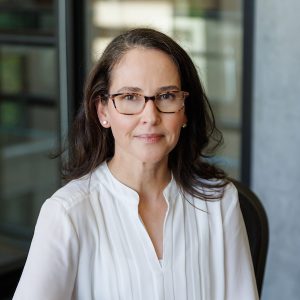
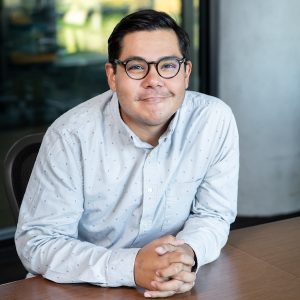
The report, “Multilingual Learners Learning English: What Can California Learn From Other States?,” compares multilingual learner policies in California, Texas, and Indiana, co-authored by Francesca López and Christopher Saldaña of the School of Education’s Department of Educational Leadership and Policy Analysis and UCLA professor Lucrecia Santibañez, the study was produced as part of Getting Down to Facts III, part of a Stanford University’s initiative designed to inform California education policy.
California educates more multilingual learners than any other state, making it an important case study for policymakers nationwide. While researchers found that California has established a strong vision for multilingual education, they concluded that the state lacks some of the systems needed to ensure consistent student support.
A central finding of the report is that Texas and Indiana place greater emphasis on verifying educator experience in multilingual learner instruction. Both states have developed specialist certification pathways and competency requirements designed to assess teachers’ knowledge and skills, while California primarily relies on authorizations embedded within general teaching credentials.
Researchers found that Texas and Indiana have created clearer specialist roles, more formal credentialing processes, and more defined expectations for educators working with multilingual learners. Those approaches have contributed to more coherent preparation systems and more consistent access to bilingual and English language development services.
“A key lesson from other states is that multilingual learner instruction should be treated as a specialized area of professional expertise,” said López. “The evidence suggests students benefit when teachers have verified competencies in language development and multilingual instruction, rather than assuming those skills are automatically covered through general teacher preparation.”
The report also highlights funding as a key policy lever. Researchers point to Texas’ incentives for dual-language programs and Indiana’s practice of tailoring support based on students’ English proficiency levels as examples California could consider.
At the same time, the authors emphasize that policy design alone is not enough. Sustained investment remains essential to implement effective programs and ensure students receive appropriate support.
The study also identifies challenges that can limit the effectiveness of otherwise promising policies. Texas, for example, has designated bilingual education as a teacher shortage field every year since 1990, underscoring the difficulty of recruiting and retaining qualified educators. In Indiana, researchers found that 16% of complexity grant funding was redirected to other special education and multilingual learner-related costs, demonstrating how targeted funding can lose impact when accountability measures are limited.
For Saldaña, those findings reinforce the need for systems that match resources with student needs.
“Every state is trying to answer the same fundamental question: how do we ensure multilingual learners receive the resources and support they need to succeed?” said Saldaña. “While the specifics vary, one consistent finding is that adequate funding matters. States must design systems that not only recognize the diverse needs of multilingual learners but also provide schools with the capacity to meet those needs effectively.”
Rather than recommending that California adopt another state’s model wholesale, the report encourages policymakers to identify effective elements and adapt them to local contexts. Recommendations include creating clearer specialist pathways for multilingual learner instruction, formally verifying teacher competencies, increasing supplemental funding, expanding incentives for dual-language programs, and aligning funding levels with students’ English proficiency.
The findings carry implications beyond California. As states nationwide seek to improve opportunities and outcomes for multilingual learners, the report suggests that investing in educator expertise and directing resources where they are most needed can help schools better support student success.
About the Researchers
Dr. Francesca López is the Jim and Georgia Thompson Distinguished Professor in the Department of Educational Policy and Leadership Analysis at the University of Wisconsin–Madison. Her research centers on educational practices and policies that promote equity and belonging for historically marginalized students, particularly multilingual learners and students from racially and linguistically diverse backgrounds.
Christopher Saldaña is an assistant professor of K-12 educational leadership and policy analysis. Chris’s research examines the relationship between K-12 school finance and educational opportunity, focusing particularly on the educational experiences of minoritized and marginalized students. Chris uses multiple and mixed methods in his research.
Lucrecia Santibañez is a Professor at UCLA’s School of Education & Information Studies and faculty co-director of UCLA’s Center for the Transformation of Schools.