UW–Madison study explores how Korean immigrant families make math meaningful
Parents Support Math Learning Through Language, Culture, Family Relationships
By Karen Rivedal, Office of Research & Scholarship
A new study by a former UW–Madison doctoral student explores how first-generation Korean immigrant parents support their elementary-aged children’s mathematics learning at home. Based on video observations of three Korean immigrant families during the COVID-19 pandemic, the study shows how participating parents drew on cultural, linguistic, and relational resources to make math meaningful.
“Mathematics in these families was not only learned but also lived, across languages, generations, and educational systems,” said author Yewon Sung, now an assistant professor at the University of Alabama at Birmingham, in the paper’s conclusion.
The research suggests educators can benefit from recognizing family-based mathematical practices and partnering with families in ways that value their cultural and linguistic knowledge. It also highlights how home environments can serve as important sites of mathematics learning and meaning-making.
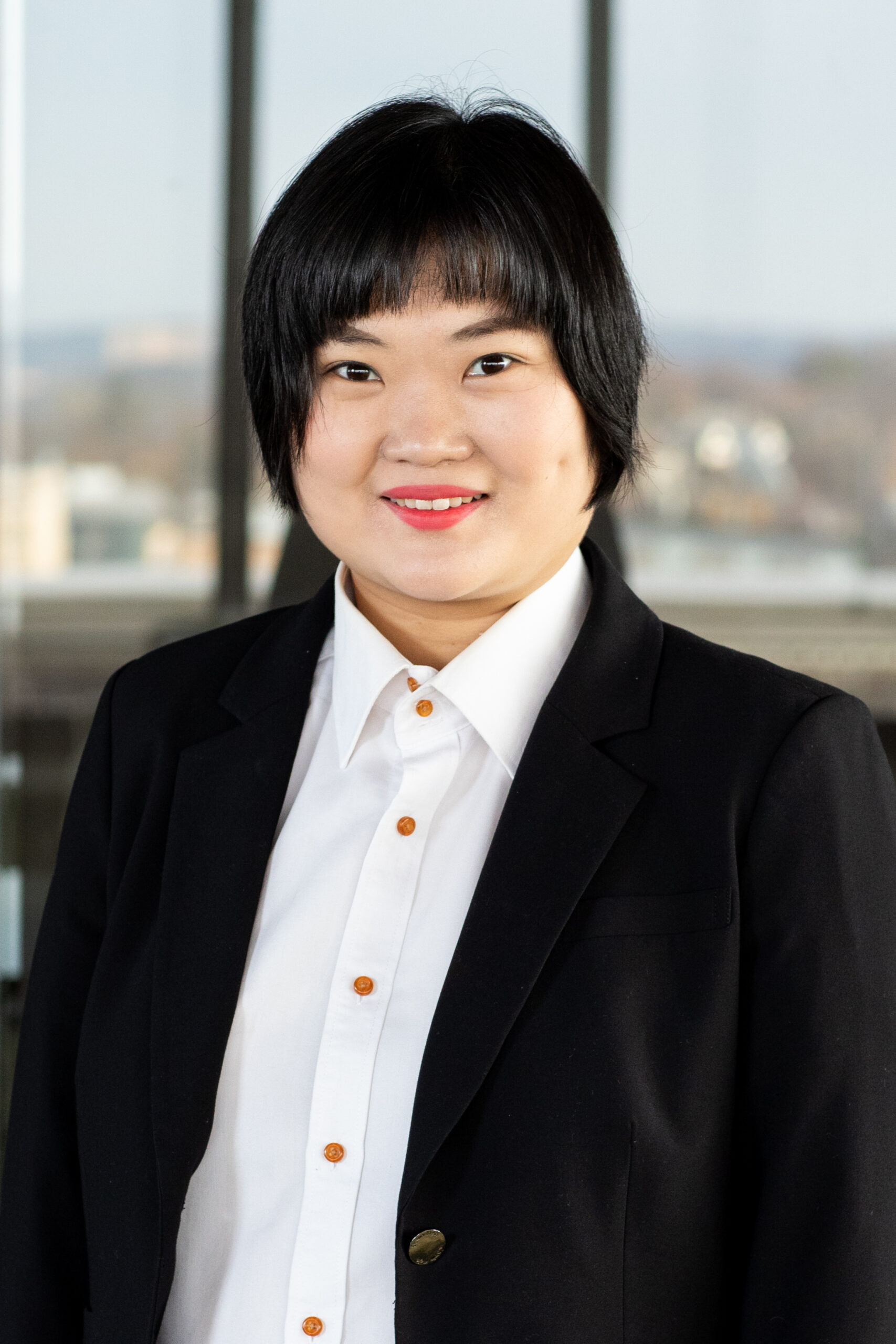
Sung’s study portrays mathematics learning in Korean immigrant families as a culturally grounded, bilingual, and relational process. Parents do more than help children complete math problems — they use cultural routines, language resources, and family relationships to support understanding, reflection and independent reasoning, expanding what counts as meaningful mathematical learning, according to the study.
Published in International Journal of Science and Mathematics Education in June, the paper is titled “Parental Mediation as Culturally Situated Epistemic Practice: Cultural, Linguistic, and Relational Resources in Korean Immigrant Families’ Home Mathematics.” The research was part of Sung’s dissertation study funded by the Thomas A. Romberg Fellowship and conducted under the guidance of Erika Bullock, an associate professor in the Department of Curriculum and Instruction in UW–Madison’s School of Education.
The research challenges narrow views of mathematics learning that focus primarily on procedures and correct answers. Instead, it shows that relational positioning and trust can shape opportunities for children to evaluate mathematical ideas, reflect on their reasoning, and exercise independent judgment.
Study findings have implications for educators and curriculum designers.
“Instruction should not be viewed as culturally neutral but shaped by family epistemologies and identity work,” the paper argued. “Educators can draw on household practices, revoice concepts in students’ home languages, and engage learners in reflective problem-solving rooted in lived experiences.”
To do the study, Sung observed six home mathematics sessions involving three first-generation Korean immigrant families with children in grades 3–5. Using video recordings and follow-up interviews, she analyzed moments when parents actively guided children’s mathematical thinking. As an analytic lens, the study used culturally relevant mathematical meaning-making, which examines how math understanding develops through interaction, cultural resources, and instructional purposes.
One key finding was that parents often drew on culturally familiar mathematics routines learned through Korean schooling. In one interaction, a mother connected her son’s reasoning about a word problem to the Korean concept of o-dan, or the five-times table. Rather than introducing this strategy in advance, she recognized it in her child’s thinking and used it to help him make sense of the problem.
From this example, the study suggests that cultural knowledge is not simply something parents possess and pass along. Instead, these resources can emerge during conversations as parents respond to their children’s ideas and build on them in real time.
The research also highlights the role of bilingualism in mathematics learning. In one observed instance, a father noticed his son used English word order while speaking a fraction in Korean. The child understood the mathematics correctly, but his phrasing reflected a mix of the two languages. The father briefly corrected the Korean expression while allowing the mathematical discussion to continue.
According to the study, this interaction shows how bilingual parents can help children navigate mathematical ideas across languages. Heritage-language knowledge serves not only as a way to explain concepts but also as a way to maintain precision and consistency in how mathematical ideas are expressed, the study found.
A third theme centered on the role of family relationships. The study found that children’s willingness to question, evaluate, and reflect on mathematical ideas was often connected to how parents positioned themselves during interactions. In one exchange, a child assumed his father’s solution must be correct simply because he was the parent. The father responded by encouraging his son to look for mistakes and think independently.
These interactions suggest that learning mathematics at home involves more than communicating content. Parents can create conditions that encourage confidence, reflection, and independent reasoning, suggesting that relationships and trust are not simply background factors in learning but can shape how mathematical thinking develops.
As global migration reshapes classrooms, future research should examine how similar patterns unfold in other cultural and linguistic communities, and how these practices travel across home and school settings and inform equitable instructional design, Sung said.