UW Dance Exchange students perform at Wisconsin State Capitol
Seven students from Lincoln Elementary School in Madison performed at the annual State of Education Address at the Wisconsin State Capitol as part of UW Dance Exchange, a collaborative program that pairs UW–Madison students with local teaching artists to bring free dance instruction into public schools.
Each September, the state superintendent of public instruction delivers the address to hundreds of educators, policymakers, and community members, highlighting the state of education in Wisconsin. While musical performances have long been a tradition at the event, this marked the first time a UW Dance Exchange group was invited to perform.
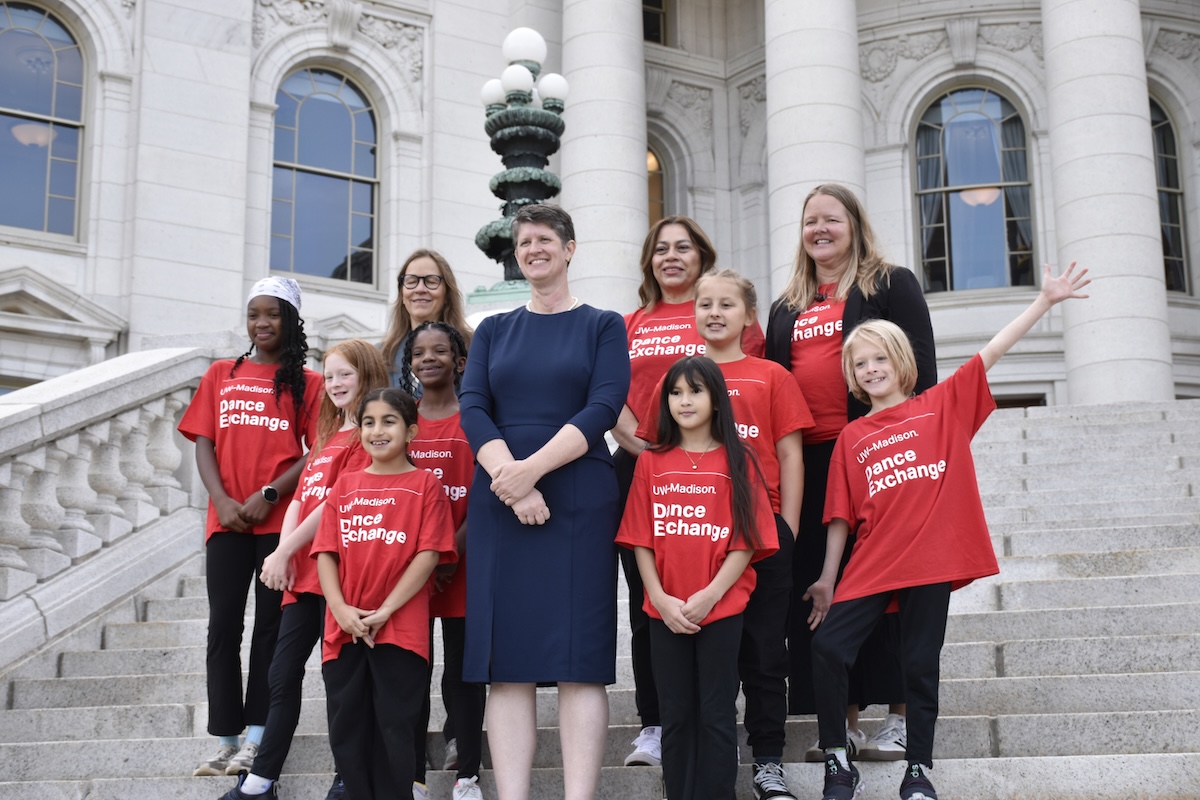
The students from Lincoln were instructed by Leah Repenshek, a senior at UW–Madison pursuing a major in elementary education and a minor in dance education. In just seven rehearsals, they created an original piece inspired by “Islandborn,” a children’s book about a young girl whose family comes from the Dominican Republic. Students selected images from the book to help shape the choreography, while the accompanying soundscape incorporated both English and Spanish.
“Throughout the process, we were really thinking intentionally about representation and belonging — who gets to be seen, whose stories are represented, and how students can see themselves in the work,” said Chell Parkins, the Arnhold Director of Dance Education in the School of Education’s Dance Department. The group included English learners, students in a dual-language immersion program, members of historically marginalized communities, and students with diverse learning and support needs.
“It was such a powerful example of what can happen when dance education creates space for students to bring their identities, experiences, and perspectives into the room,” said Parkins.