‘A golden opportunity’: UW–Madison and Cap Times partner on Youth Press Corps for budding journalists
By Laurel White
Erin Gretzinger knows how it feels to be young and deeply invested in a future career path.
When she was growing up in Appleton, Wisconsin, Gretzinger sought out a journalism camp. The only nearby camp she found was for young boys — specifically, boys currently enrolled in one of the local Boy Scout troops — but Gretzinger didn’t let that deter her. She got permission to join the program, immersed herself in the experience, and the rest is history. She is now an award-winning journalist, currently working as the K-12 education reporter at the Cap Times in Madison.
This summer, Gretzinger had the full-circle experience of mentoring similarly enthusiastic budding journalists participating in the Greater Madison Writing Project’s Youth Press Corps. The week-long summer youth camp offers the opportunity for students in grades 7-12 to learn foundational journalism skills through lessons, mentorship, and hands-on reporting. Each participant’s week culminates with the completion of their own piece of original journalism — a story that will be published in the Cap Times under their byline.
“It has been fun, and heartwarming, and a wonderful experience,” Gretzinger said on the last day of the camp. “Getting a chance to work with young people who are passionate about writing and journalism warms my heart.”
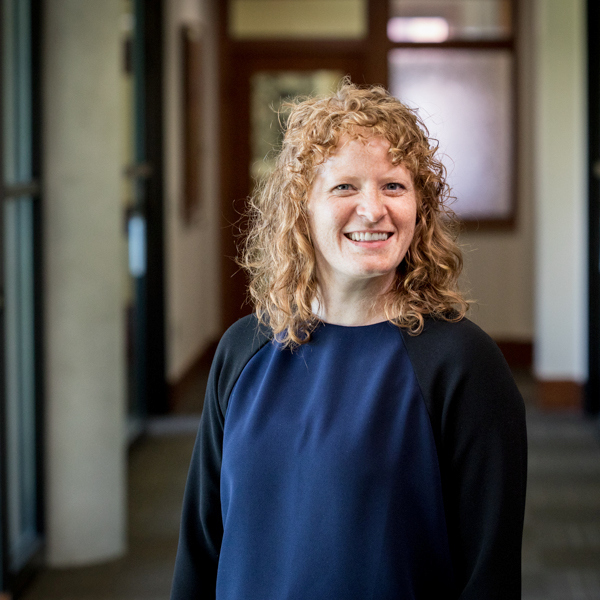
Bryn Orum, director of the Greater Madison Writing Project (GMWP), which is housed in the UW–Madison School of Education, says the Youth Press Corps camp helps young writers better understand the role journalism plays in society.
“This camp is a chance for students who are curious about the news to learn about how it’s made,” she says. “It’s a great learning experience, whether or not a student is interested in becoming a journalist someday.”
Mark Dziedzic, who also directs GMWP, says all of the project’s camps — which also include a comics and graphic novel camp, an art and writing camp, and a fan fiction camp, among others — aim to provide a warm, welcoming, and supportive environment that helps young people uncover new skills, ideas, and a community of like-minded students.
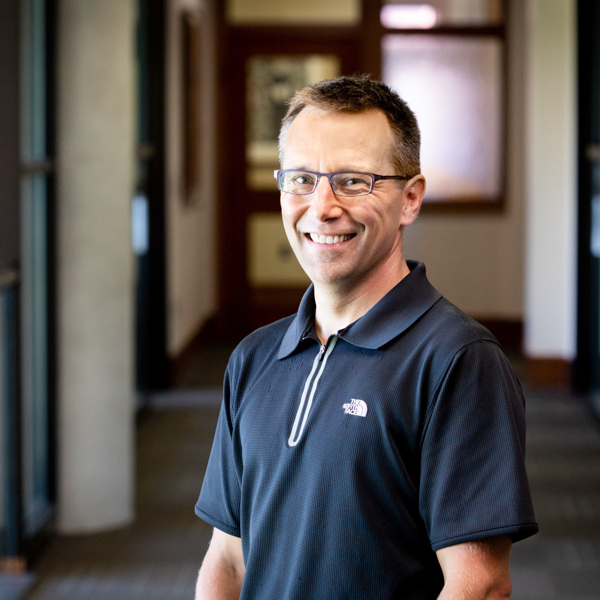
“We hope our camps help young people connect with their love of writing, and each other,” Dziedzic says.
Adala Almotery, a senior at Middleton High School, was one of 11 participants in the Youth Press Corps this year. She identified her love of writing early, and started attending Greater Madison Writing Project camps nine years ago.
“I was really excited to see a journalism opportunity,” she said.
But Almotery also noted the camp will resonate for young writers who aren’t necessarily bound for careers in news.
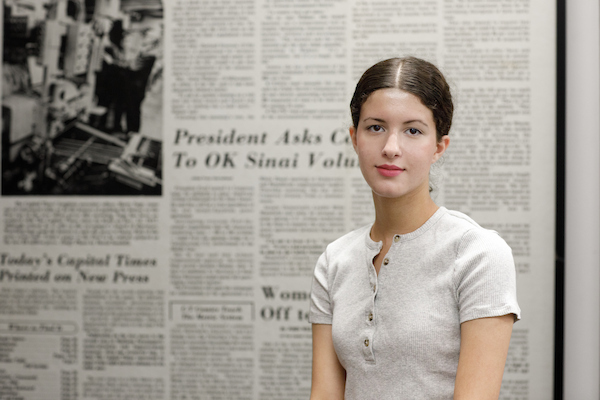
“It fosters skills you use in life, like interviewing, writing, and meeting deadlines,” she said. “I think it’s really important, and a golden opportunity.”
Almotery’s story for the camp focused on the Madison Metropolitan School District’s consideration of new policies related to inappropriate relationships between teachers and students, including grooming. She said digging into such heavy subject matter felt important and personally meaningful.
Another participant, Abhika Singh, a junior from Brookfield High School, said the camp gave her a new perspective on journalism as a career.
“I didn’t take it as seriously as I do now,” she said. “I’ve learned journalism is about human connection.”
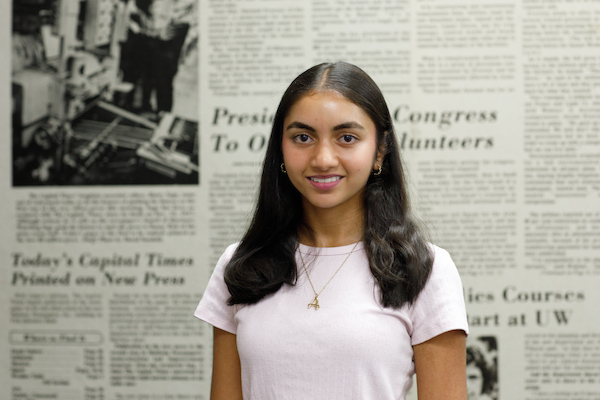
Singh’s story focused on Wisconsin state lawmakers’ attempts to address a shortage of teachers in the state.
Other stories produced at the camp illuminated issues as varied police deescalation strategies, how Wisconsin high schools are navigating new “name, image, likeness” (NIL) policies at the college level, and how county animal shelters grapple with large influxes of stray cats.
“People are writing about what’s meaningful to them,” Almotery noted. “It’s nice to see how programs like these support that.”
Related: Greater Madison Writing Project helps educators write to become better teachers