Impact 2030: Transformational and Innovative Learning Experiences
Our goal is to provide the very best, high-impact educational experiences for our students. In addition to strengthening these efforts across the arts, health, and education, we’re also innovating beyond our classroom walls by putting new resources into developing the highest quality online and hybrid learning experiences possible. The School is committed to helping undergraduates become involved with cutting-edge research projects, and is creating and expanding valuable in-person and virtual paid internship options. We’re refocusing our vital global engagement strategies and, once it’s safe again to travel internationally, growing the number of study abroad opportunities tied to one’s major. The School is also dedicated to educating and empowering our students to be equity-oriented agents of change and productive citizens who embody the Wisconsin Idea.

Faculty-led Study Abroad Development grants: “These novel, faculty-led study abroad programs across the arts, health, and education will offer many unique opportunities for undergraduate students, who will take School of Education courses in their field of study and experience different styles of teaching and global perspectives. Students will also build lasting friendships and networks with individuals from around the world, and develop key academic and professional competencies and capabilities.” — Li-Ching Ho, faculty director of the Global Engagement Office and an associate professor with the Department of Curriculum and Instruction
Learn more about the Faculty-led Study Abroad Development grants
Internships
The School of Education is committed to dramatically increasing the number of students who participate in high-quality, paid internships. The highest quality internships engage students in professional, meaningful work that has clear, strong connections to their academic program.
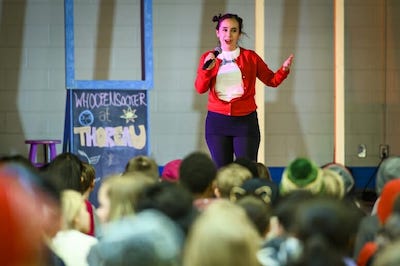
Whoopensocker
Whoopensocker is an education residency focused on creativity, expression, writing, and collaboration. Whoopensocker’s ensemble of teaching artists bring in new ideas to the classroom. They use performing and creative arts to design innovative classroom experiences. The focus of the Whoopensocker six-week residency is self-empowerment of students and is ideal for children in elementary school.
Real Talk for Real Change
Real Talk for Real Change focuses on issues of racial justice. The series of symposia aims to provide transformational learning experiences and to create a platform that lifts up the work of scholarship and voices, especially of faculty of color. In all, more than 2,600 people signed up for the seven Real Talk for Real Change events during the 2020-21 academic year.
Adapted Fitness changing the perception of what’s possible
As part of the School’s Impact 2030 initiative, UW–Madison alumni Ginny (1978 physical education) and Mike (1978 engineering) Conway made a generous major gift to make sure the Adapted Fitness program will have dedicated space in the new UW Natatorium, which is scheduled to open in 2023. The Conways are passionate about this program. Their support, plus generous backing from the university, will assure there is a new, state-of-the-art Adapted Fitness space that will not only better serve clients from the community — but continue to provide incredible training and leadership experiences for students.
Learn more about the important work our students are doing with the Adapted Fitness program
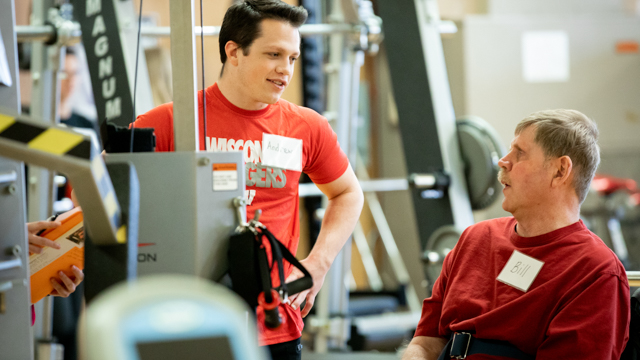
To serve its roughly 90 clients, the Adapted Fitness program trains and utilizes more than 250 UW–Madison student volunteers, who are essential to the success of the program. Each client the program serves works closely with two to four students, forming a “fitness team.” While in-person workouts were typical prior to March of 2020, the Adapted Fitness program, its clients, and students were able to keep things running during the COVID-19 pandemic by quickly moving its offerings to remote delivery modes.
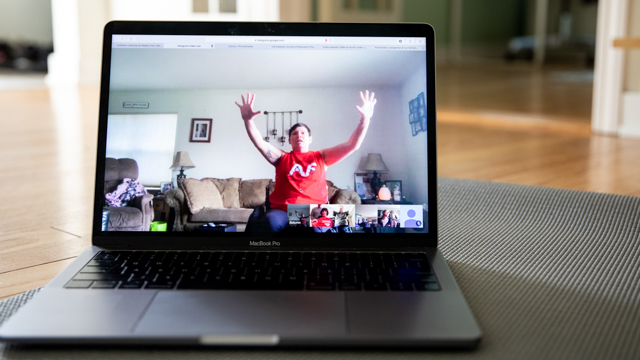
Autumn Neugent, a longtime participant in the Adapted Fitness program, leads a virtual chair yoga class in April while meeting in person on campus was not possible due to the COVID-19 pandemic. “The students helping with the Adapted Fitness classes gain such a better understanding of people with diverse abilities and people in general. The Adapted Fitness program is both a physical and emotional support for all of us.”
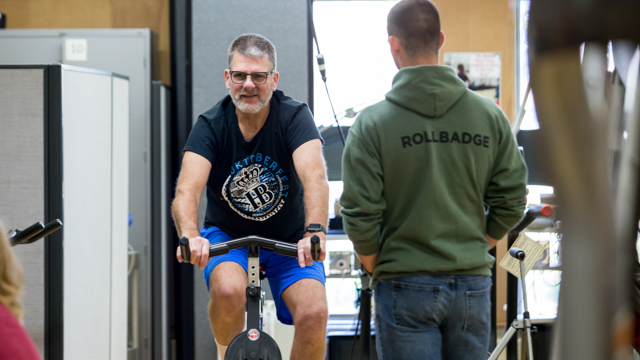
Students work with clients of the Adapted Fitness program in “fitness teams” of two to four students with each person. During more typical times, such meetings were always in-person. But even during the COVID-19 pandemic, students and their clients found ways to stay in touch and keep working together via virtual platforms. Says Tim Gattenby, who leads the Adapted Fitness program: “We are training students in kinesiology who are going to go on to medical school or be physician assistants and occupational and physical therapists — and this experience is opening their eyes to what is possible for their patients.”
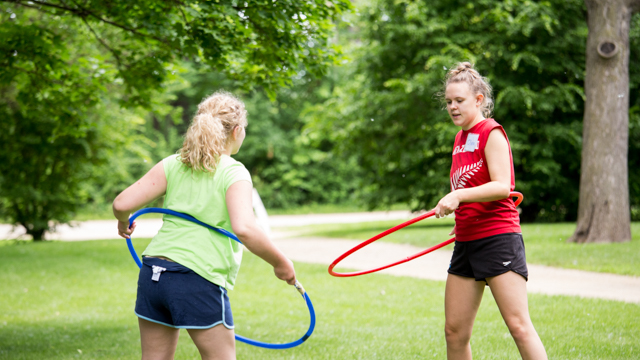
During more typical times, UW–Madison students help run the in-person No Limits Kids Fitness program each summer for young people with physical and cognitive disabilities. With a subset of future physical and occupational therapists, physicians and physical educators from the Department of Kinesiology, these UW–Madison students work closely with children with cerebral palsy, spina bifida, and a variety of disabilities that too often exclude young people from activities their peers take for granted.
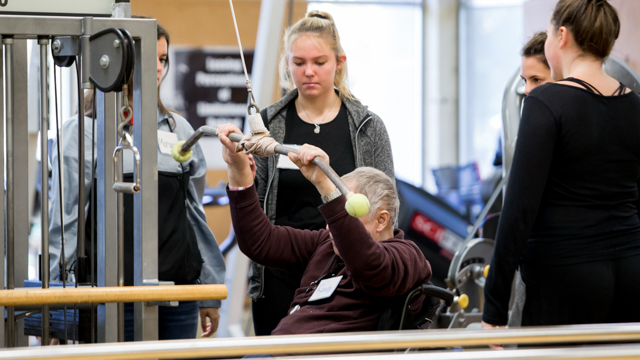
Students work with clients of the Adapted Fitness program in “fitness teams” of two to four students with each person. “Our program shows students the importance of not setting limitations,” says Tim Gattenby, who coordinates Adapted Fitness and Personal Training for the Department of Kinesiology. “They come out of this coursework with a very different philosophy and attitude toward working with people with disabilities.”
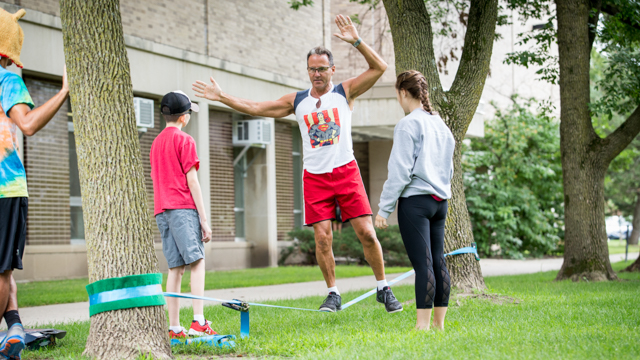
Distinguished Faculty Associate Tim Gattenby, who directs the Adapted Fitness program, has spent more than three decades helping people with a range of abilities find new and innovative ways to stay active. During more traditional times, Gattenby leads a “No Limits Kids Fitness” program that helps children with physical and cognitive disabilities participate in a range of activities and group sports.