Podcast on school privatization and discrimination features UW–Madison’s Mead
Mead is the School of Education’s associate dean for education, and a professor with the Department of Educational Leadership and Policy Analysis.
On this episode, they discuss Mead’s recent report, co-written with Suzanne Eckes, titled “How School Privatization Opens the Door for Discrimination.” They touch on issues related to voucher programs and charter schools.
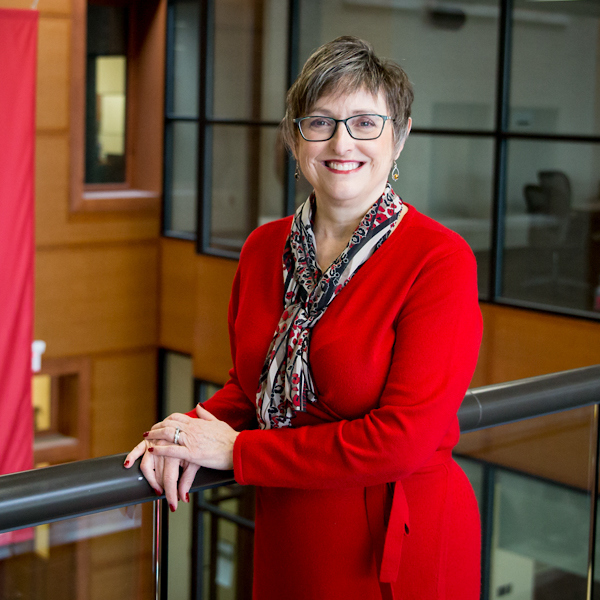
Mead reminds that discrimination has a dictionary definition, but it also has a legal definition.
Mead notes that there are various laws in place that protect from discrimination, in addition to the 14th amendment. These laws impact private and religious schools, but differently than public schools. In some cases, they don’t affect these schools at all, and in other times, because the way the law is written, do have some effect on private schools.
While public schools are required to provide special education to provide a student with a disability a baseline free and appropriate education, private schools are only obligated to provide reasonable accommodations to existing education programs. If the private school feels they are unable to meet the student’s needs, they can ask that the student withdraw. Under the law, this is not considered discrimination.
However, charter schools are a kind of public school, meaning that they are subject to discrimination laws. Voucher schools, though, are somewhere in between. Vouchers are federal funds given to participating private schools. If a school receives vouchers, they are required to operate in certain ways, although this doesn’t necessarily include non-discrimination practices.
Mead suggests that states take action, by requiring schools participating in voucher programs to submit to discrimination laws.
To learn much more about this important, nuanced topic, listen to the podcast via this Fresh Ed website.