UW–Madison researchers to partner with parents of Black-Jewish children in bid to boost student belonging in early childhood education
By Karen Rivedal, Office of Research & Scholarship Communications
A study team led by UW–Madison education researcher Michal Avera Samuel will use a $45,300 private grant to examine how parents of Black-Jewish children support identity and belonging in early childhood — with findings to help Jewish educators build more inclusive and affirming learning environments for pre-kindergarten through first grade students.
Researchers expect practical guidance generated by the study to help Jewish early childhood educators create curricula, professional learning, and family engagement strategies that are more welcoming. The work will help address a critical lack of education resources that reflect increasing racial and ethnic diversity in the Jewish community.
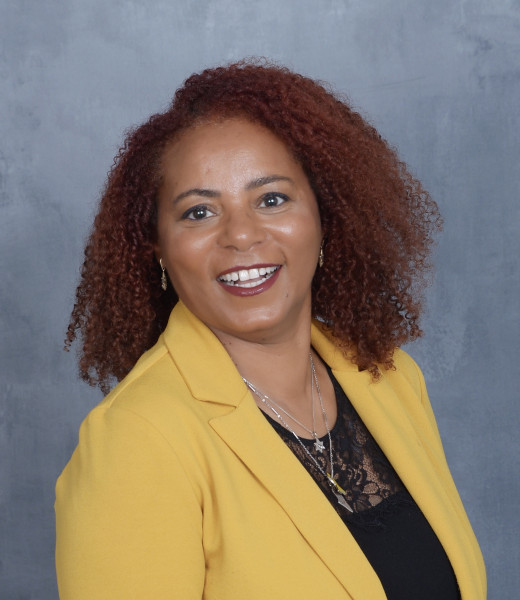
“This support will help advance research on belonging, representation, cultural socialization, and identity development among Black-Jewish families,” said Samuel, a doctoral researcher and coordinator of the similarly themed Shalom Curriculum Project in the School of Education’s Wisconsin Center for Education Research (WCER). “The important thing is to get data to understand how we can support those young children, because we know that belonging is the foundation for early childhood education.”
The grant was awarded this summer through Shalom Curriculum Project by CASJE: a lab for research in Jewish education at the George Washington University. CASJE’s 2026 Small Grants program made the award following an open, competitive request for proposals on Jewish educational processes and outcomes.
The other members of Samuel’s research team are Principal Investigator (PI) Janean Dilworth-Bart, a professor in UW–Madison’s School of Human Ecology, and three study consultants: WCER-based Shahanna McKinney-Baldon, Erika Bocknek of the University of Michigan, and Iheoma Iruka of the University of North Carolina at Chapel Hill.
McKinney-Baldon and Dilworth-Bart also hold roles within Shalom Curriculum Project, which provides learning tools for Jewish early childhood educators aimed at increasing awareness and understanding of Jewish diversity, among other initiatives. McKinney-Baldon is co-PI for the Shalom Curriculum Project and Dilworth-Bart is its faculty advisor.
“We want kids to be able to see themselves in the classroom, through images and stories,” Samuel said about the curriculum project. “We want to see that their culture and history is being honored and celebrated in the classroom with their peers and friends.”
As PI for the study, Dilworth-Bart brings expertise in how social and environmental contexts influence school readiness and achievement among Black children. The study will be part of her Child and Family Ecologies (CAFÉ) Lab, while her position as a faculty member gives her access to the data storage, analysis, and transcription services needed to complete it.
“This project dovetails nicely with my expertise in early childhood development, school readiness, and family science because of my interest in how parents’ experiences shape how they prepare their young kids for school,” said Dilworth-Bart, who will also supervise 300 hours of student-intern work on the project and assist Samuel in coordinating meetings of key project personnel and CAFÉ lab members.
Most recently, Dilworth-Bart has focused on exploring diversity among Black families.
“This includes fathers and fathering, families raising biracial children, Black immigrant families, and Black families in Africa,” she said. “I have been lucky to be able to partner with students and professionals, like Michal, who invite me to add my expertise to their important work.”
McKinney-Baldon will contribute expertise to the study in social justice education, racial equity and evaluation, while Bocknek, a professor and family therapist, will provide in-kind expertise in developmental systems theory and mixed-methods research design. Iruka is a nationally recognized developmental scientist whose work on Black family processes and well-being will strengthen the study’s methodological rigor and interpretation.
Samuel will manage study operations and community integration, drawing on her experience in Ethiopian-Israeli advocacy and Jewish communal leadership. She will conduct all participant interviews, lead data analysis, and coordinate meetings.
Describing the study as part of an “emerging area of research that continues to grow within Jewish education,” Samuel said she looked forward to contributing to a body of scholarship that elevates the voices of Black-Jewish families and positions their experiences as central to understanding how belonging is cultivated, challenged, and sustained in Jewish life.
The study, “Belonging, Representation, and Cultural Socialization: Partnering with Parents of Black-Jewish Children in Early Childhood Education,” will revolve around two questions:
- How do families describe their own identities related to Jewishness and Blackness, and how do Black-Jewish families approach cultural socialization during the early childhood years in response to sociocultural contexts?
- What factors inhibit or promote Black-Jewish families’ partnerships with Jewish early childhood education programs?
The research team will conduct a mixed-methods study incorporating surveys and in-depth interviews to glean quantitative and qualitative data from parents of Black-Jewish children.
The parents recruited will be Black, white or biracial so that the study features a variety of families raising Black-Jewish children by birth or adoption, said Samuel.
Recruitment will occur through established partnerships with groups including Jewish early childhood education organizations, the Jews of Color Initiative, and the Paradigm Project.