School of Education faculty honored with WARF Professorship, Romnes Fellowship
Two faculty from the School of Education were recently honored with prestigious campuswide research awards from the Office of the Vice Chancellor for Research.
David Williamson Shaffer and James Pustejovsky are among just 42 faculty across campus chosen to receive a 2026-2027 WARF Named Professorship or H.I. Romnes Faculty Fellowship. The distinctions acknowledge a track record of excellence in scholarship and provide funding to continue producing impactful work.
In a story about the awards posted by the Office of the Vice Chancellor for Research, Dorota Brzezinska, vice chancellor for research, said the honors “represent some of the most meaningful investments in the people who drive discovery at UW–Madison.”
“These prestigious honors provide researchers with the recognition, flexibility, and support needed to pursue bold ideas, advance groundbreaking scholarship and address society’s most pressing challenges,” Brzezinska said. “Just as importantly, they affirm the university’s commitment to fostering excellence and empowering faculty to lead in their fields, inspire the next generation of scholars, and extend the Wisconsin Idea through research that benefits the world.”
David Williamson Shaffer — WARF Named Professorship
Shaffer was one of eight faculty awarded a WARF Named Professorship, which comes with $100,000. The recognition honors faculty who have made major contributions to the advancement of knowledge, primarily through their research endeavors, but also because of their teaching and service activities. Award recipients choose the names associated with their professorships.
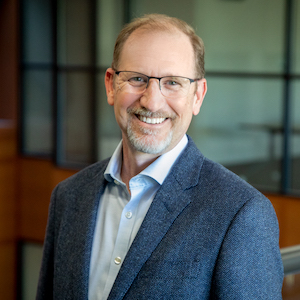
Shaffer chose the Ada Lovelace Professor of AI and Education as the name associated with his professorship. He is also the Sears Bascom Professor of Learning Analytics and the Vilas Distinguished Achievement Professor of Learning Sciences in the Department of Educational Psychology, a data philosopher at the Wisconsin Center for Education Research, and director of the Center for Research in Complex Thinking.
Shaffer’s master’s and doctoral degrees are from the Media Laboratory of the Massachusetts Institute of Technology. He is a fellow in the International Society for Learning Sciences, the founding editor-in-chief of the Journal of Quantitative Ethnography, and was recently named a member of the National Academy of Education.
Shaffer joined UW–Madison as an assistant professor in the Department of Educational Psychology in 2001, became an associate professor in 2006 and professor in 2008. At UW, Shaffer has done foundational work in the field of games and learning, culminating with the book, “How Computer Games Help Children Learn.” His book “Quantitative Ethnography” became the basis of a field that merges AI, statistical, and qualitative methods to build fair models of complex human activity. His current work explores how the partnership between human and machine is reshaping what it means to think and learn.
James E. Pustejovsky — H.I. Romnes Faculty Fellowship
Pustejovsky was one of 18 faculty honored with an H.I. Romnes Fellowship, which recognizes faculty with exceptional research contributions within their first six years from promotion to a tenured position. The award is named in recognition of the late WARF trustees president H.I. Romnes and comes with $60,000 that may be spent over five years.

Pustejovsky is an associate professor in the Department of Educational Psychology. He is a leading authority on methodology for evidence synthesis and meta-analysis, which concerns how to combine findings from multiple sources of evidence to answer novel research questions and support broader generalization than possible based on single studies.
Pustejovsky’s research is distinctive for providing rigorous theoretical developments, open-source software to support application of new methods, and accessible, well-contextualized guidance for practice. He teaches quantitative methods courses on meta-analysis, field experiments, quasi-experimental design, and Monte Carlo simulation. He also serves on the board of trustees of the Society for Research Synthesis Methodology, having recently completed a term as president of the society.