UW–Madison’s Ho, Stoddard receive Elizabeth Fennema Faculty Fellowships
By Todd Finkelmeyer
UW–Madison’s Li-Ching Ho and Jeremy Stoddard, both faculty members with the School of Education’s Department of Curriculum and Instruction, were recently named Elizabeth Fennema Faculty Fellows.
The Elizabeth Fennema Faculty Fellow Fund is designed to recognize, encourage, and support research and scholarship by faculty members within the Department of Curriculum and Instruction. The fellowships include financial support.
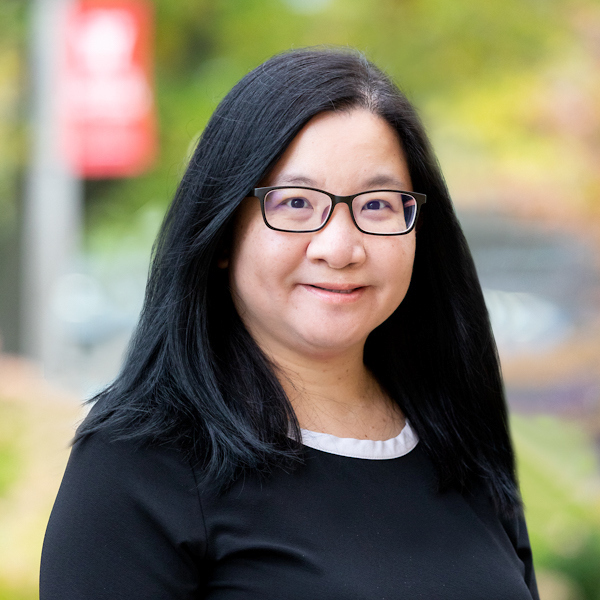
Ho is the current chair of the department and a professor of social studies education whose global civic education research has primarily been conducted in East and Southeast Asia. Her work focuses on issues of diversity in civic education and environmental citizenship education. An award-winning scholar, Ho was previously a recipient of the Vilas Faculty Associates Award, the Vilas Faculty Early Career Investigator Award, and the College and University Faculty Assembly Early Career Research Award.
She co-authored the 2021 book, “Curriculum for Justice and Harmony: Deliberation, Knowledge, and Action in Social and Civic Education,” which focuses on a simple question: “How do we prepare young people to work for a better world?” In addition to being widely published in highly regarded journals, Ho has also worked closely with scholars, teachers, and students in numerous countries such as China, Japan, South Korea, Singapore, Brunei, and the Philippines.
Ho says she is honored to receive the fellowship, which will allow her to expand an ongoing cross-national civic education project that focuses on how teachers in Ireland and New Zealand prepare students to take effective and meaningful social action in their communities and beyond. In addition, the study also explores young people’s understandings of civil and uncivil approaches to social action, and how these perspectives are shaped by the wider social, education, and political contexts.
“The financial support provided by the faculty fellowship will allow me to conduct additional research on teachers and students in two other countries that have very different political and educational contexts,” she says. “This study is important because it has practical implications for pedagogy and curriculum, and contributes to a more detailed and nuanced understanding of the educational process of preparing young people for social action.”
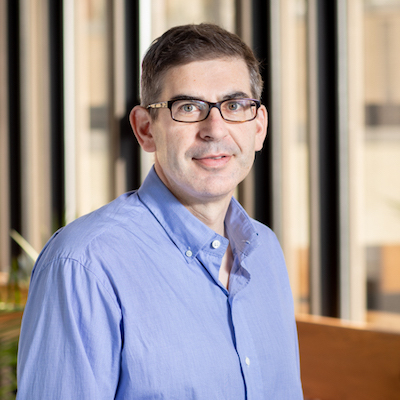
Much of Stoddard’s work centers on the teaching of civics and history in partisan contexts, the integration of media education into democratic education, and engagement with so-called “difficult” or marginalized histories and contemporary controversial issues.
His forthcoming book, “Teaching Social Studies in an Age of Partisanship and Polarization,” is informed by a decade of research, including studies of how teachers engaged students in issues around the 2018, 2020, and 2024 U.S. elections and a federally funded curriculum development and research project designed to engage students in understanding the role of media in politics. The book in particular focuses on strategies for addressing the effects of political polarization and partisanship that is impacting classrooms and school contexts. The studies on teaching the elections have won research awards from the American Educational Research Association and the National Council for the Social Studies. The simulation curriculum project, PurpleState , was funded by the Institute of Education Sciences and is a free curriculum designed for civics teachers to engage secondary students in understanding the role of media in controversial policy issues at the state and local level. Stoddard has also conducted research for more than two decades examining how middle- and high-school teachers help students understand the 9/11 attacks and the controversial war on terror that followed.
Stoddard says the acknowledgement of his work is deeply appreciated.
“At a time when federal funding for research in civics and social studies education has been largely eliminated, this fellowship will allow my research team to continue to build on past work and have an impact with teachers and students in Wisconsin and beyond,” he says.
Stoddard said the funds will help his PurpleState research group, which is made up of graduate and undergraduate students as part of the Center for Research on Complex Thinking, develop and test the impact of new classroom curriculum and supports for teachers that will generate pilot study data, and serve as a proof of concept for seeking additional funding from foundations and other sources.
Ho and Stoddard have also each helped lead the School of Education’s Teaching About the Elections Conference, which features experts in politics, civic education, and media literacy from across the country providing a day of training and support for educators preparing to provide high-quality lessons about an upcoming election.
Dean Marcelle Haddix commended Ho and Stoddard on the fellowship honors, noting that their work has provided vital contributions to the field of civic education at a pivotal time for the field.
“We’re proud of the exemplary work advanced by Li-Ching Ho and Jeremy Stoddard,” Haddix says. “We look forward to continuing to support their scholarship and service for years to come.”
Elizabeth Fennema was a longtime UW–Madison faculty member and pioneering researcher on the teaching and learning of mathematics. Fennema, who died in December 2021, spent 34 years with the Department of Curriculum and Instruction and was also a senior scientist with the Wisconsin Center for Education Research.