UW–Madison’s Nathan explores the role of the body in learning on podcast
UW–Madison’s Mitchell Nathan was recently featured on “The Science of Creativity” podcast, hosted by Keith Sawyer, to discuss embodied cognition — the idea that learning is grounded in the body, in movement, and in the physical world.
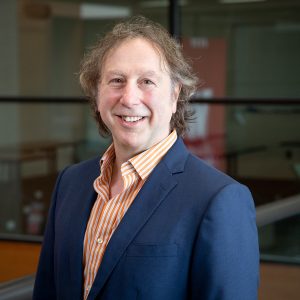
The episode highlights how, from solving algebra problems to understanding complex ideas, our bodies help us learn in ways that traditional schooling often overlooks. Topics include how gestures reveal what learners are really thinking, why meaning — not memorization — should be the goal of learning, how bodily movement can support understanding of abstract concepts like mathematics, the limitations of artificial intelligence, and implications for teachers and schools.
“Engaging our bodies is just this really powerful way to help our thinking and our learning, and I would like to say it’s not just helpful, I think it’s fundamental to how humans think and learn,” says Nathan, a Vilas Distinguished Achievement Professor in the School of Education’s Department of Educational Psychology.
Even in highly abstract fields like mathematics, Nathan explains, embodied learning can deepen understanding. While math is often perceived as disconnected from everyday experience, he emphasizes its real-world grounding.
“Well, you know, math is kind of this interesting thing, because in a way, it’s this created system of notations, but we use it to model the world,” Nathan says.
He notes that young learners — and even adults — often manipulate mathematical symbols without fully understanding them. “We sometimes don’t fully understand what those symbols mean,” he says.
Embodied learning offers a way to bridge that gap. By linking mathematical ideas to lived experiences, learners can build more meaningful understanding. For example, concepts like slope can be tied to familiar experiences such as walking up a hill, going down a playground slide, or skiing.
“When we bring the connection between that mathematical idea to that physically lived experience, that’s where we achieve learning,” Nathan says.
Listen to the full episode to learn more.