Throughout the semester, we’re shining a light on the Art Department’s graduating MFA candidates as they present their final thesis exhibitions. These exhibitions are the culmination of years of dedicated study and artistic exploration, showcasing our students’ diverse talents and innovative approaches to art-making.
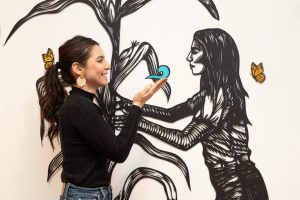
Christie Tirado is an interdisciplinary artist and educator and an MFA candidate in printmaking, books, and paper. Her work includes relief prints, handmade paper works, and large-scale installations that explore migration, memory, and how traditions are passed through everyday gestures such as cooking, cultivating, and working with one’s hands.
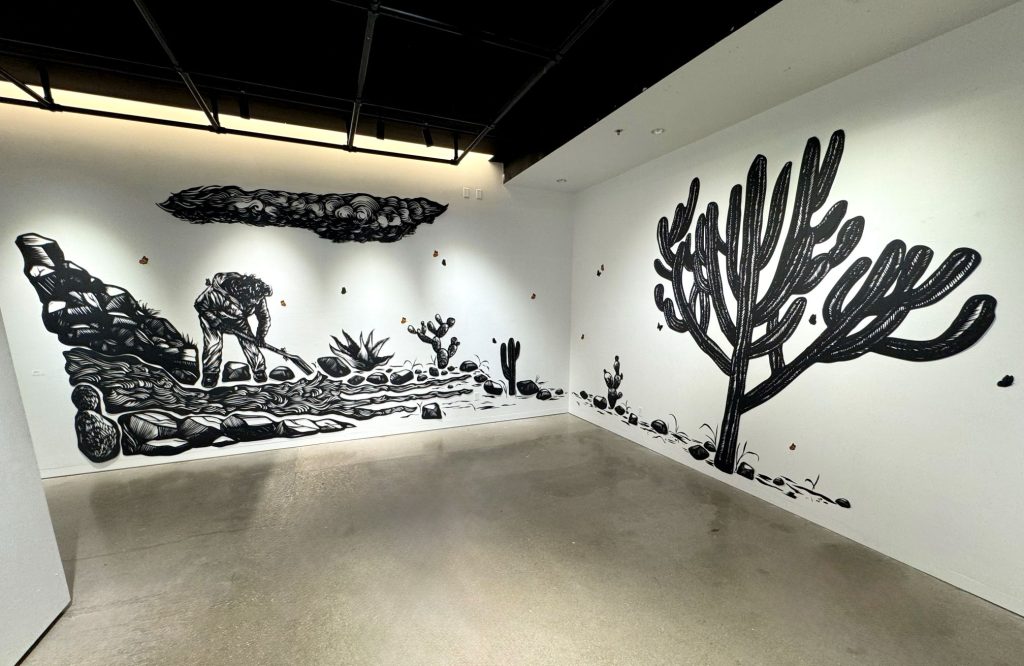
“My MFA thesis exhibition transforms printed imagery into immersive laser-cut paper environments, expanding intimate family stories into a shared space,” Tirado says. “Through repetition, layering, and pattern, I investigate how culture endures across generations and how the body can hold history.”
Tirado’s MFA thesis exhibition, “Cosechando Historias,” is on view at the Latino Arts Gallery (1028 S. 9th St., Milwaukee) from March 6 to June 5. An opening reception will take place on Friday, March 6, from 5 to 7 p.m.
We asked Tirado to share more about her work:
What inspires your work?
Over the past three years, I’ve been traveling back and forth between Mexico and Wisconsin to conduct research and gather stories connected to my family’s history. My work is inspired by the ways migration reshapes what we carry, and how traditions are passed down through everyday rituals, how memory lives in the body, and how our connection to home and to the land can persist across distance and time.
I’m especially interested in the stories that don’t always make it into official records: the quiet histories held in cooking, labor, and care. Through printmaking and large-scale paper installations, I translate these family narratives into layered images that honor what’s remembered, what’s left out, and what endures.
How do you create your work?
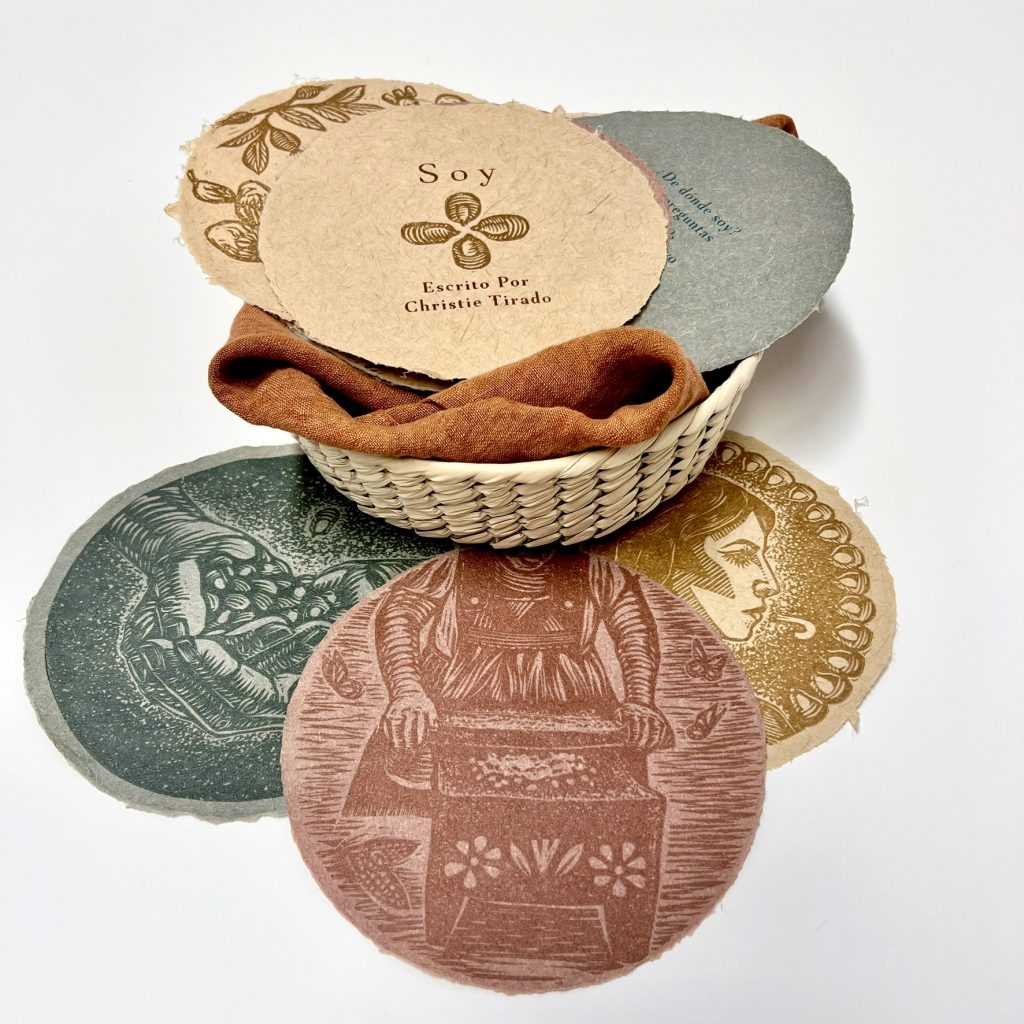
I start with my prints, but the process changes depending on the story I’m telling. I choose the print method that best supports the narrative and how I want the image to live on the surface of the paper. Some works are relief prints, where I carve away the negative space, ink the raised areas, and run the block through the press to transfer a bold, graphic image. Other pieces are made using intaglio processes, where the image is etched into a plate and the press pushes damp paper into the inked lines, creating a deeper, more tactile mark.
From there, I expand the printed imagery into books and installations. For artist books, I sequence prints and materials so the work unfolds over time, mirroring the way stories are carried and revealed. For installations, I scan my prints, refine and scale them digitally in Photoshop and Illustrator, and translate them into large sections cut from mat board. I install these sections slightly off the wall (about 1/4 inch), which creates a soft shadow that adds depth and helps the printed imagery become immersive.
What do you hope viewers take away from your exhibition?
I hope viewers leave with a sense of how memory lives in ordinary, everyday rituals — cooking, working, planting, and caring for others — and how those gestures can carry culture across generations. I want the exhibition to feel both personal and collective: an invitation to reflect on what we inherit, what we choose to hold onto, and what gets lost or left out of the record. Ultimately, I hope viewers recognize their own family histories in the work and consider how traditions, land, and labor shape identity — and how art can honor the stories that deserve to be seen and remembered.