By Laurel White
For many parents, time alone to focus on themselves is a precious rarity — opportunities to read a book, connect with a friend, or do a workout are often overrun by caretaking.
For parents of children with disabilities, those windows of opportunity can be even more rare.
On a Wednesday morning, gathered in a small gym in the Medical Sciences Center, a group of UW–Madison scholars and local moms are trying to lift the weight — literally and metaphorically.
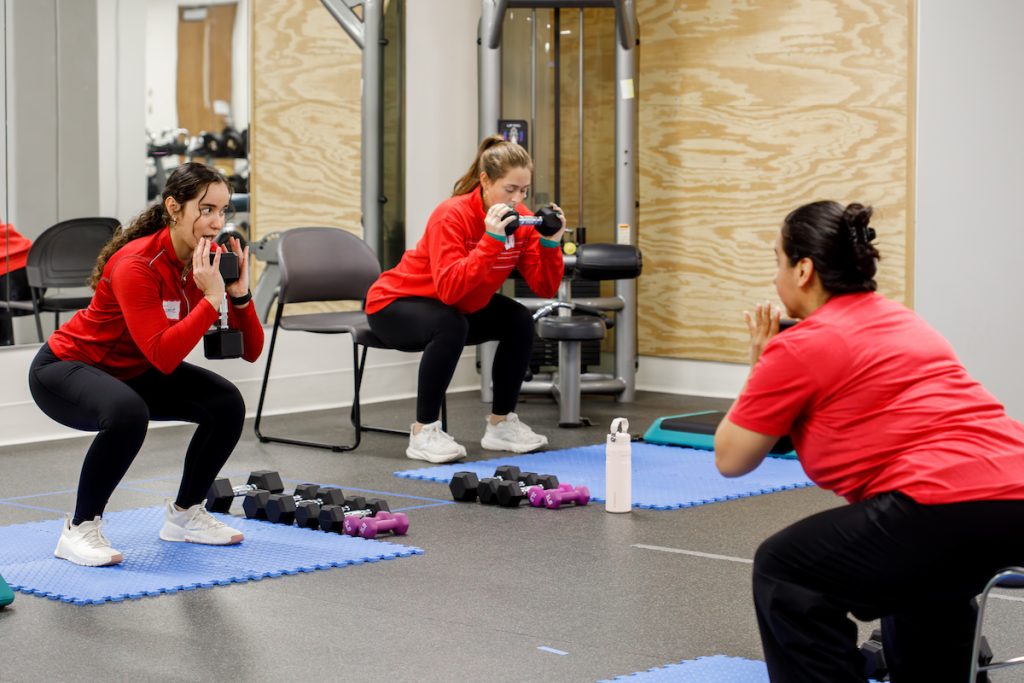
Dressed in workout gear, including matching red UW–Madison Department of Kinesiology t-shirts, the moms hit the deck for push-ups. A round of applause follows the set, along with a few relieved smiles.
“This is a blessing,” says Ana, whose 10-year-old son has autism spectrum disorder. “We’re all part of a group that’s been put to the side.”
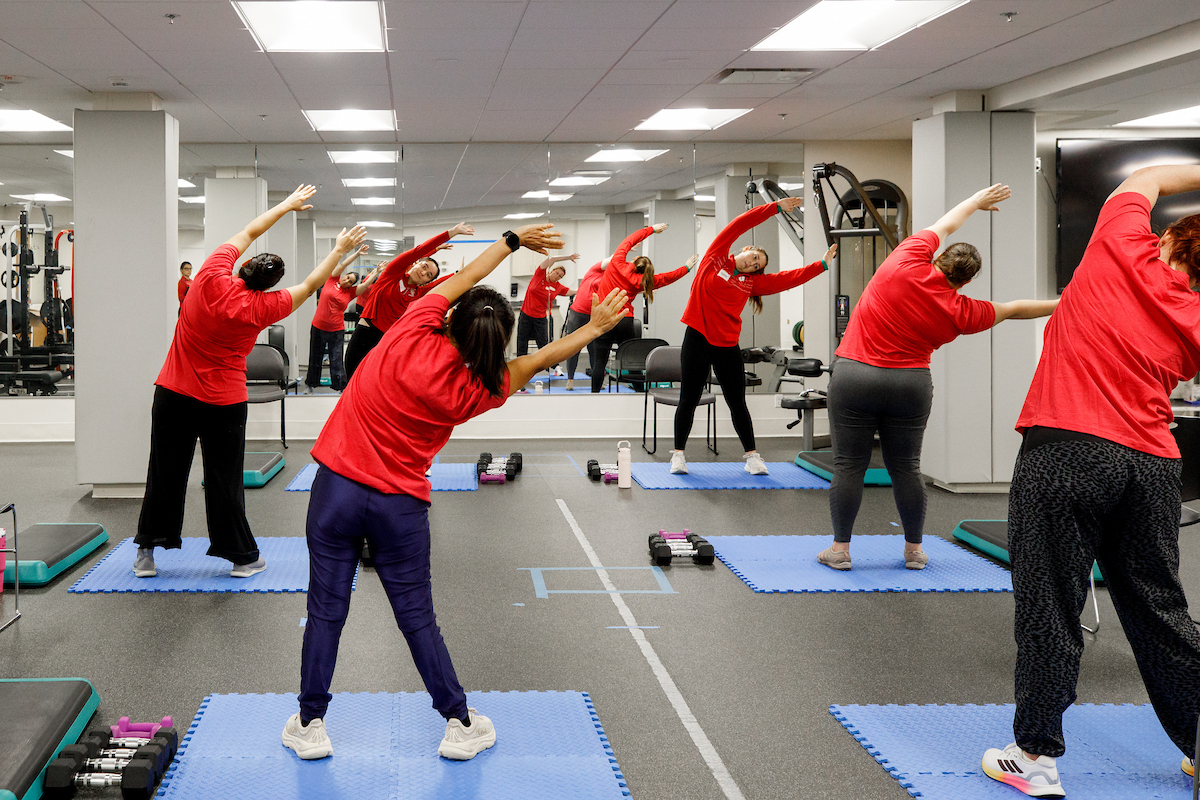
The workout class, which meets three times a week over 10 weeks, is one of the latest initiatives of the Promotion of Health Equity and Adapted Physical Activity (PHEAPA) Lab in the School of Education’s Department of Kinesiology. Led by professor Luis Columna, the lab is dedicated to the development and implementation of fitness programs for individuals with disabilities and their families. Its Fit Families program has already reached hundreds of families across Wisconsin.
“This program gives mothers an opportunity to take part in structured exercise sessions designed to support their health and well-being,” Columna says.
The initiative is the first from the PHEAPA Lab focused exclusively on parents. Its creation and roll-out is supported by everyone in the lab — Columna and a crew of talented doctoral, graduate, and undergraduate students.
Jamie Lee Jaime Concepción, a kinesiology doctoral student, designs and leads the workouts. She says she’s happy to provide an outlet for parents after often seeing them on the sidelines.
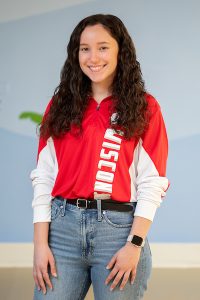
“I noticed that while we would work with the children, parents were waiting in a chair or the parking lot — I wanted to do something for them,” she says. “If they’re not okay, their child won’t be okay.”
Carlos Cuebas García, another doctoral student in the lab, coordinates coach training for the initiative, as well managing program logistics, including data collection procedures and implementation oversight.
“This space provides the group an opportunity to de-stress,” he says, noting participants seem to appreciate the mix of strength and cardio the workout provides.
During the workout, other doctoral and graduate members of the lab — Tanu Shree Yadav, Gayatri Swarup, and Mar Barquero — circulate as participants complete the exercises, providing support with smiles, form corrections, and high fives. Swarup and Barquero also help lead a yoga-style cool down at the end of the program. Roughly 20 undergraduate students also chip in at various stages to support the effort.
In addition to the data recorded during workouts, participants also self-report mental health changes from week to week. After the workout and in the weeks to come, members of the lab will crunch the numbers on participants’ health outcomes.
“This is truly a team effort,” Columna says. “For this project, Jamie Lee has taken the lead, bringing her expertise in developing exercise programs to serve this population. Other members of the lab step in where needed to make sure the program runs smoothly.”
In the end, the lab hopes to determine how beneficial the program was to participants’ all-around wellness — and how such programs could be designed in a way that accommodates the group’s unique needs.
Some light has already been shed on what those needs are.
In the February 2026 edition of the Journal of Autism and Developmental Disorders, Concepción published a study on the factors that influence exercise participation among Latino parents of children with developmental disabilities. She found there were several barriers to exercise for the group: limited time, exhaustion, cultural expectations, financial constraints, and a lack of program awareness.
“Parents described the difficulty of balancing daily responsibilities with their desire to exercise,” she wrote. “The demands of caregiving, job obligations, and limited family support often led them to deprioritize their health.”
But Concepción also found a widespread awareness among the group that regular exercise would be good for them — and their children.
“Participants recognized the value of regular exercise, not only for their own well-being but also to better support their families,” she wrote. “Many expressed a strong sense of responsibility to care for their children, while also acknowledging the need to prioritize their health.”
Concepción’s study helped inform the workout program for mothers. She made sure the program offered morning and afternoon sessions, in order to increase availability for the group.
At the end of the workout, Ana reflects on the value of the program. She says it does much more for her than a traditional gym membership could.
“The gym doesn’t know the stress we’re going through,” she says.
In the coming months, the PHEAPA Lab hopes to expand the pilot program into a larger effort. Lab members are discussing the possibility of adding childcare during the session, or including fathers in the experience.
Ana says she is hopeful about the future of the program — whatever it looks like.
“I really hope this keeps going,” she says.