The UW–Madison School of Education offers academic excellence in areas spanning the arts, health, and education. We are a proud community of innovative leaders, creative thinkers, and fearless trailblazers. Our talented students are committed to making their college experience a meaningful journey that aligns with their interests and helps them achieve their future goals.
Following is a Q&A with Henry Karelitz, who is pursuing a bachelor’s degree in Kinesiology and graduating in spring 2026.
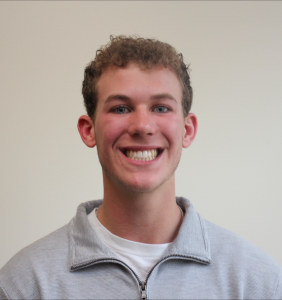
Where are you from, and how did you become interested in pursuing a degree in this field? I am from St. Paul, Minnesota. Like many other Kinesiology students, I became interested in exercise science through my love for athletics. I was a cross country, hockey, and track athlete in high school who dealt with recurring injuries nearly every year. Instead of becoming frustrated, I became curious. I wanted to understand why injuries happen, how the body heals, and what could be done to prevent them from occurring again. That curiosity naturally led me to kinesiology.
How did you decide that you wanted to become at UW–Madison Badger? One of the main reasons I was drawn to UW–Madison was the location. Madison offers an incredible balance of academics and lifestyle. There are two lakes surrounding the campus and many different running paths to explore — and all of this is within a vibrant college town. It was also close enough to home that I could return for holidays. Beyond location, I was aware of UW–Madison’s strong academic reputation and the opportunities it provides for students pursuing medical school. I knew it would challenge me and prepare me well.
What has been your most meaningful experience with the Kinesiology program? One of my most meaningful experiences was participating in a summer study abroad course in Costa Rica with Cindy Kuhrasch and Dr. Luis Columna. Through that experience, I formed friendships with other kinesiology students that continued well beyond the trip. When I returned to campus, I found that at least one person from Costa Rica was in nearly every class I took. It made a large university feel much smaller and more connected. Beyond the friendships, the experience itself was unforgettable. I went ziplining through the rainforest, white water rafting, and fully immersed myself in Costa Rican culture. Just as important were the instructors. Cindy and Dr. C genuinely cared about our learning and our experience. I highly recommend study abroad to anyone considering it.
What class or professor has had the greatest impact on you, and why? It is difficult to choose because I have had many outstanding professors. I deeply valued my anatomy and physiology courses because they allowed me to connect my own injuries to the underlying muscular and physiological systems. My teachers and TAs in those classes were super helpful and knowledgeable. However, Dr. Beth Fields has had the greatest impact on me. She is the principal investigator of the Geriatric Health Services Research Lab, which I joined during my first semester of freshman year. Through my work on the Dementia Care Partner Hospital Assessment Tool (DCHAT) study, I have taken on significant responsibility and gained meaningful insight into patient-centered healthcare research. Dr. Fields has been an incredible mentor. She has helped me with scholarship applications, rewriting my resume, and finding activities that will strengthen my medical school application. I also want to acknowledge Anne Mortensen, our lab manager, whose mentorship and consistent support has been invaluable. All the faculty at UW–Madison truly invest in the students and I am incredibly grateful for that.
What are your future goals or plans? I plan to take a couple of gap years to work in medical sales while I apply for medical school. My long-term goal is to become an orthopedic surgeon.
Anything else you value about the School of Education or your program that you’d like to share with others who are considering it? What sets the Kinesiology program apart from others is the faculty, opportunities, and students. Being surrounded by driven students has pushed me to grow academically and personally. I also value all of the research opportunities that UW–Madison has to offer. If you are willing to reach out and show initiative, there are countless ways to get involved.
Do you have any tips for students thinking about how to maximize their experience? My only tip is to put yourself out there. Introduce yourself to professors, participate actively in class, and join organizations that interest you. The beginning can feel intimidating but once you take that first step, doors begin to open.
Can you tell us about a time when an academic advisor helped you? During my sophomore year I signed up for a very difficult semester. I thought I could handle organic chemistry, anatomy, and anatomy lab. After two weeks, I sent my advisor, Nancy, an email asking for her help. She met with me the same day and helped restructure my schedule to make it more manageable. Since then, she has consistently checked in each semester to ensure I am doing well in my classes and am on track to graduate. I really appreciate all the time she has put into helping me.
Have you participated in any internship/work experience, research, or study abroad program? What did you participate in and could you talk a bit more about those experiences? For work experience, I officiate youth, high school, and college club hockey games in the Madison area through the Dane County Hockey Officials Association (DCHOA). It has been a flexible and rewarding job during college. I also work as an EMT at Midwest Medical, which is conveniently located near campus and accommodates students’ academic schedules well. In research, I am part of the Geriatric Health Services Research Lab under Dr. Beth Fields. The lab focuses on improving quality of care and quality of life for older adults and their care partners. I have had the opportunity to take on leadership roles within projects, which has been both challenging and deeply rewarding. I have also participated in two study abroad programs: a short-term summer course in Costa Rica and a semester-long program in Rome. Studying abroad has been one of the most transformative aspects of my college experience. The global perspective and cultural awareness I gained are invaluable and will stay with me long after graduation.