A new study led by UW–Madison School of Education Professor Aydin Bal and collaborators demonstrates how sustained partnerships with Indigenous researchers, educators, and tribal leaders can transform schooling through culturally grounded, community-driven design.
Published in Frontiers in Education as part of a special issue on research–practice partnerships (RPPs), the article, “From Contradictions to Kinship: Expansive Learning and Concept Formation in the Wild,” examines the Indigenous Learning Lab, a multi-year collaboration among UW–Madison researchers, a rural school district, and the Anishinaabe Nation.
The study documents how the partnership co-designed the Explorer Program, a culturally grounded credit-recovery pathway that integrates academic learning with Anishinaabe land-based practices such as wild ricing, maple sugaring, and community service. Rather than treating student disengagement as an individual deficit, the team reframed it as a product of historically rooted tensions between punitive school discipline and Indigenous kinship-based values.
Over five years, the Indigenous Learning Lab brought together students, families, educators, tribal leaders, and university researchers in iterative cycles of collective analysis and redesign. The results were striking: Participating students reported stronger belonging and motivation, educators observed improved relational trust, and program data showed substantial reductions in absenteeism and disciplinary referrals, with graduation rates approaching 100 percent.
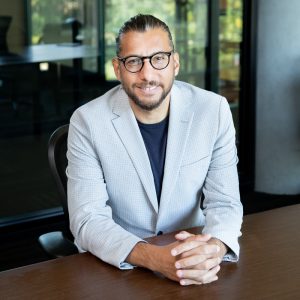
Bal, a faculty member in the Department of Rehabilitation Psychology and Special Education, noted that the work illustrates a broader shift in the learning sciences. “This project shows that meaningful school transformation emerges not from technical fixes alone but from long-term, trust-based partnerships in which communities reclaim authorship over educational design.”
The project reflects the School of Education’s commitment to the Wisconsin Idea by linking rigorous research with community-defined priorities in Wisconsin schools and tribal communities. It also advances national conversations about equity-oriented research-practice partnerships by demonstrating how Indigenous epistemologies can drive systemic educational innovation.
Co-authors include UW–Madison School of Education collaborators, school practitioners, tribal education leaders, and internationally recognized Cultural-Historical Activity Theory scholars Yrjö Engeström and Annalisa Sannino, underscoring the project’s cross-sector and global reach.
As schools nationwide grapple with persistent inequities and student disengagement, the Indigenous Learning Lab offers a powerful example of how universities and communities can work together to build relational, culturally sustaining, and future-oriented educational systems.