Throughout the semester, we’re shining a light on the Art Department’s graduating MFA candidates as they present their final thesis exhibitions. These exhibitions are the culmination of years of dedicated study and artistic exploration, showcasing our students’ diverse talents and innovative approaches to art-making.
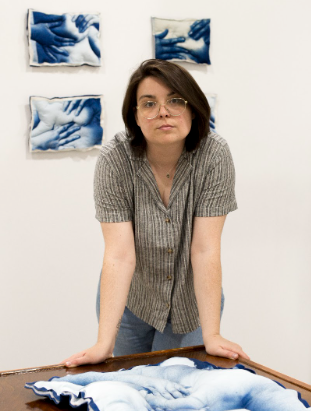
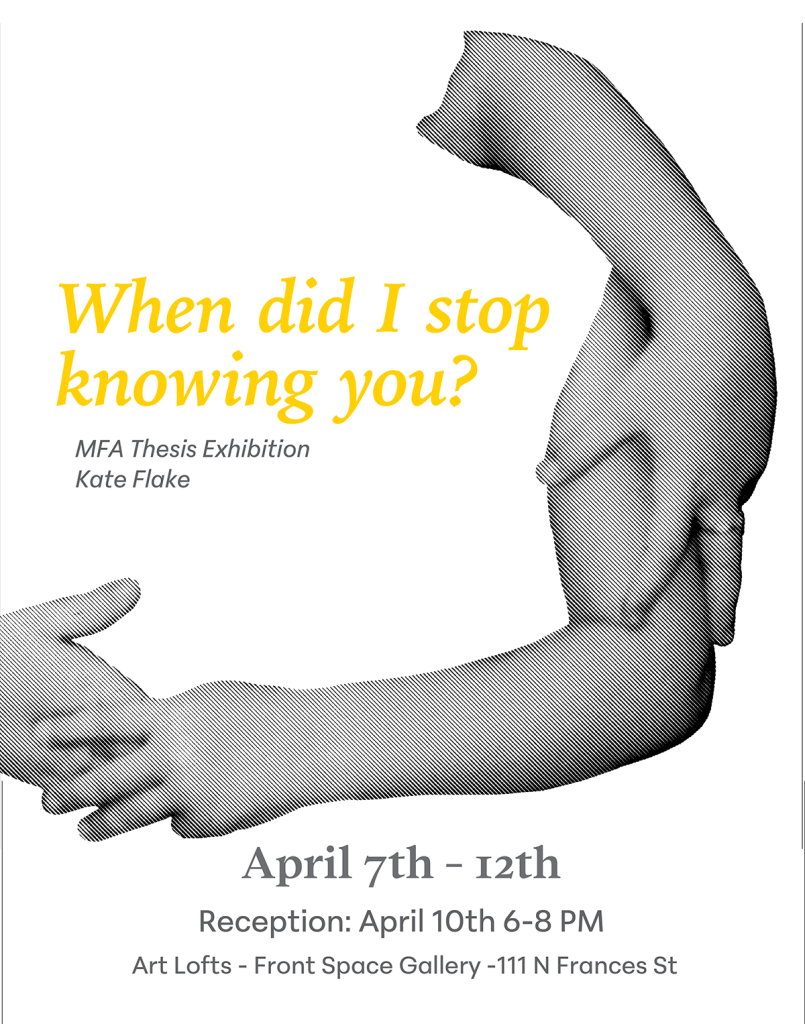
Kate Flake is an interdisciplinary artist working with photography and printmaking to create sculptures and installations that explore identity, family, and the body. Their MFA thesis exhibition, “When did I stop knowing you?” will be on view April 7–12 in the Front Space Gallery at UW–Madison’s Art Lofts, with a reception on Friday, April 10, from 6–8 p.m.
Flake’s practice centers on fragmenting and reconstructing photographs into sculptural forms that question how identity is shaped over time. Drawing from a family archive of childhood images, their work examines memory, gender, and the experience of growing up in the American South. The exhibition includes a paper installation and a collaborative artist book created with their brother, offering two perspectives on a shared upbringing and evolving relationship.
We asked Flake to share more about their work:
What inspired you to create this work?
When I began grad school I was fascinated by my mother’s archive of family photos, but I wasn’t sure what to do with them. After some initial false starts, I finally understood what I could do with the images and began working on an artist book. I couldn’t help but notice how my brother and I were dressed and posed in the images. Since we are only about a year apart in age and were both assigned female at birth, we were often treated like twins. Until we started school, we were each others’ world. I wanted to understand how we changed so drastically from the gender we were assigned at birth and why each of us explored identity differently.
The project allowed me to connect more deeply with my brother and understand how lonely and difficult things were for him. I also understood myself better in learning about him. Until recently our lives were much more separate. The book has really allowed us to create a new bond and we are far more likely to just call each other.
 How did you create it?
My most recent work manipulates images pulled from my family’s archive of childhood photographs to interrogate how my childhood growing up in the American South influenced my gender identity and familial relationships. While these photographs are concrete proof that I existed, I have very little memory of the time they depict. I only vaguely recognize the young girls in the photographs… In manipulating them, I reclaim and recontextualize my childhood. My identity is not found in the static images but in the fracturing and rearranging of the pieces.
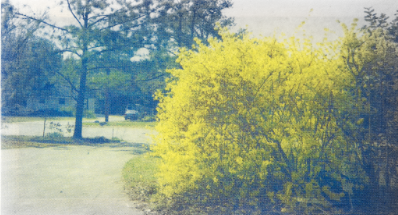
Another piece of the show, the paper installation, is meant to evoke the forsythia bush we played in as children. For me that bush symbolizes a place of play, pretend, and unlimited possibilities. I wanted to recreate the feeling of sunlight coming in, the gentle and calm atmosphere of sitting inside the bush — which is why it is hung in a circle and backlit.
What do you hope viewers take away from your exhibition?
Ideally I hope people walk away with a bit more understanding about queer and trans folks. Right now, in this political climate, trans and queer folks are being used as scapegoats. We are being dehumanized and told we are the problem. This is of course not true. Queer folks have always existed, though we may not have had the language or ability to express that queerness. I hope that people walk away with a bit more empathy and ability to see themselves, even just a bit, in our story.