By Karen Rivedal, Office of Research and Scholarship
A new book by Peter McDonald, an assistant professor in the School of Education’s Department of Curriculum and Instruction at UW–Madison, details how notions of play were transformed in the second half of the 20th century, dubbed the “era of designed play.”
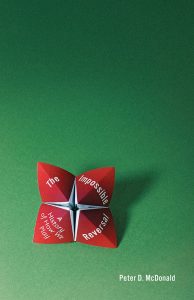
The book, “The Impossible Reversal: A History of How We Play,” published in February by the University of Minnesota Press, traces the cultural history of play from the late 1950s through the early 1990s. McDonald argues this was a period marked by a profound shift in how Americans understood and developed playful experiences.

“Part of what I’m trying to understand is why there is this shift in the 1950s and ‘60s, when games and play move from being on the periphery of what’s valuable about a culture to being really more at its center,” McDonald said in an interview. “The concept and practice of play become essential for understanding changes in cultural, technical and economic production.”
The book identifies several key games and playful experiences throughout the half-century, including the emergence of experimental art movements like Fluxus that incorporated games, early computer games, and the rise of role-play in everything from therapy to corporate training.
The book’s central argument is that play is not a single or unchanging human activity. McDonald challenges the common assumption that play is always spontaneous, joyful, or funny. Many forms of play, he notes, are quiet, repetitive, or even unsettling.
“We need to think about play as having multiple kinds of experiences and recognize that play changes historically,” McDonald said.
To make this case, the book identifies four distinct styles of play that took shape during the studied era:
- The impossible reversal, in which a seemingly unsolvable problem becomes clear through a small shift in perspective. As an example, McDonald points to riddles, which seem obvious once the answer is revealed.
- Expending the secret, which explores forms of play built around secrecy — such as 1960s spy toys with hidden cameras or message‑shooting gadgets. In these cases, secrecy functions like a currency, becoming more valuable in the sharing of it.
- Simulated freedom includes games like “SimCity,” which McDonald calls “a bad simulation” in the best sense. Its exaggerated disasters and simplified systems allow players to experiment with the ordinary world in playful, satirical ways.
- Oblique repetition captures focused, quiet forms of play, such as building with Legos without instructions or a design in mind. These activities may look like work from the outside, but they represent a meaningful kind of play that is often overlooked.
Beyond categorizing play, the book uncovers new historical findings that reshape how scholars understand the field. One discovery involves the origins of “serious games,” such as computer simulations for education or training. Many researchers date these to the 1970s, but McDonald’s archival work found examples from decades earlier, including mainframe‑based simulations used for management training and international relations.
Another surprising thread traces the evolution of role playing. What began as improvised theater in Vienna in the early 1920s shifted to become a therapeutic technique in the U.S. in the 1930s, before migrating into military training during World War II. By 1943, the U.S. military had created a “three‑day training camp” where prospective spies were evaluated by “getting them to role-play fictional characters,” McDonald said.
The book is aimed at scholars in game studies, art history, American studies and cultural studies, as well as educators interested in the history of play and learning. McDonald hopes readers will gain a more expansive understanding of play and why it matters.
“When we don’t recognize these other kinds of play, we can stigmatize people who play in those spaces,” McDonald said. Understanding play’s diversity, he added, helps us better appreciate children’s behavior, cultural practices, and the many ways people use play to navigate the world.
McDonald also hoped the book would spark further research. The four categories of play he identified are only a beginning. “I would love someone to take up this challenge and do more work around kinds of playfulness,” he said.