Throughout the semester, we’re shining a light on the Art Department’s graduating MFA candidates as they present their final thesis exhibitions. These exhibitions are the culmination of years of dedicated study and artistic exploration, showcasing our students’ diverse talents and innovative approaches to art-making.
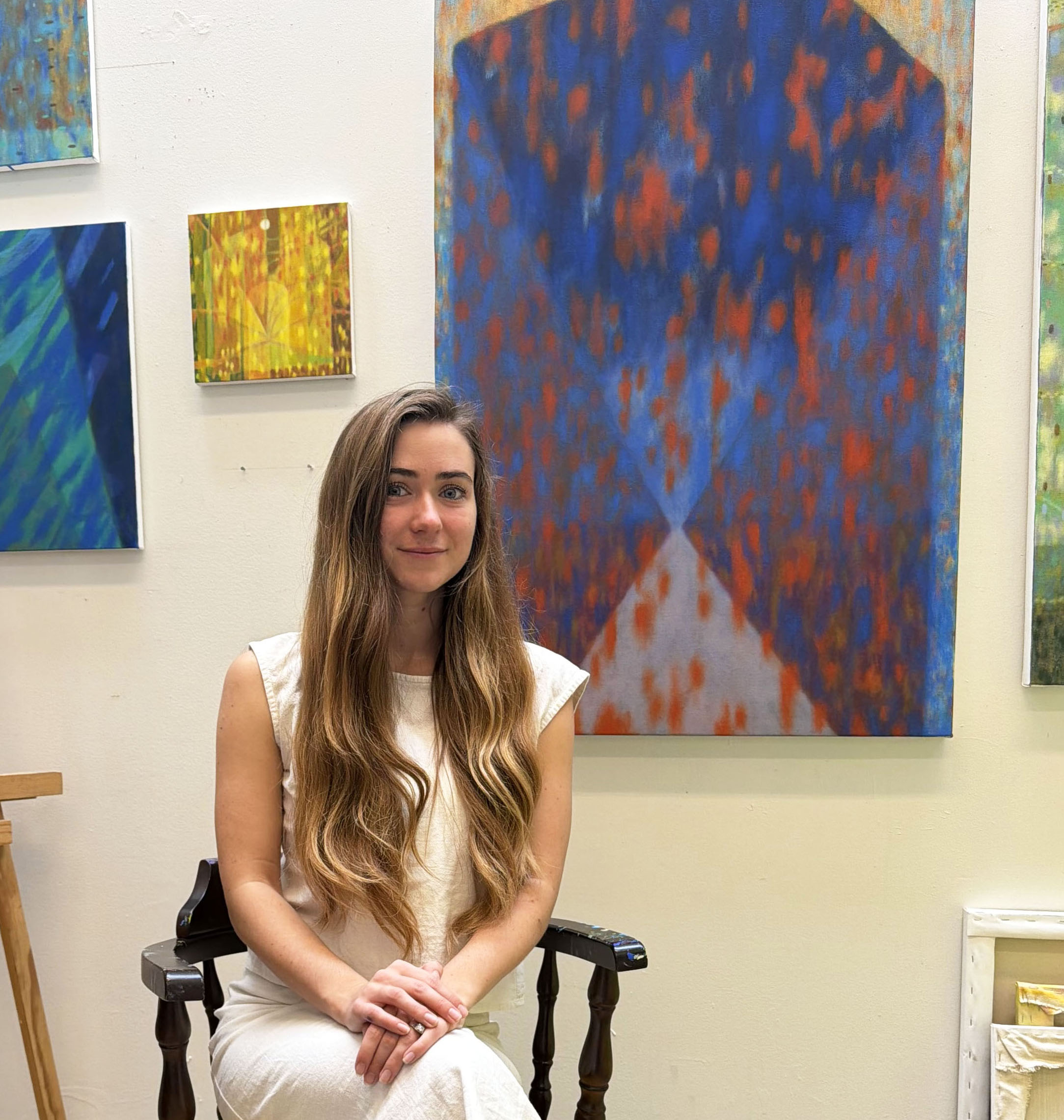
Kalil Mitchell creates luminous, abstract paintings that explore the interplay among light, space, and perception. She explains her work “hovers between revelation and concealment, using shifting layers of light and touch to evoke states of impermanence, transcendence, and ambiguity. Through circular motifs like suns, moons, and dots, the paintings reflect on natural cycles and the tension between presence and disappearance, creating thresholds of uncertainty and becoming.”
Mitchell’s MFA thesis exhibition, “Bright Obscurities,” will be on view at UW–Madison’s Art Lofts Gallery (111 N. Frances St.) from March 24–28. An opening reception, which is free and open to the public, will take place on Wednesday, March 25, from 5 to 8 p.m.
We asked Mitchell to share more about her work:
What inspired you to create this painting?
This was the first painting that I created in 2026, and its source or inspiration was inherently somatic and light-driven. I knew from the beginning that I wanted it to emit a warm, earthly light that felt both familiar and strange, conjuring a felt sense of heat and radiance.
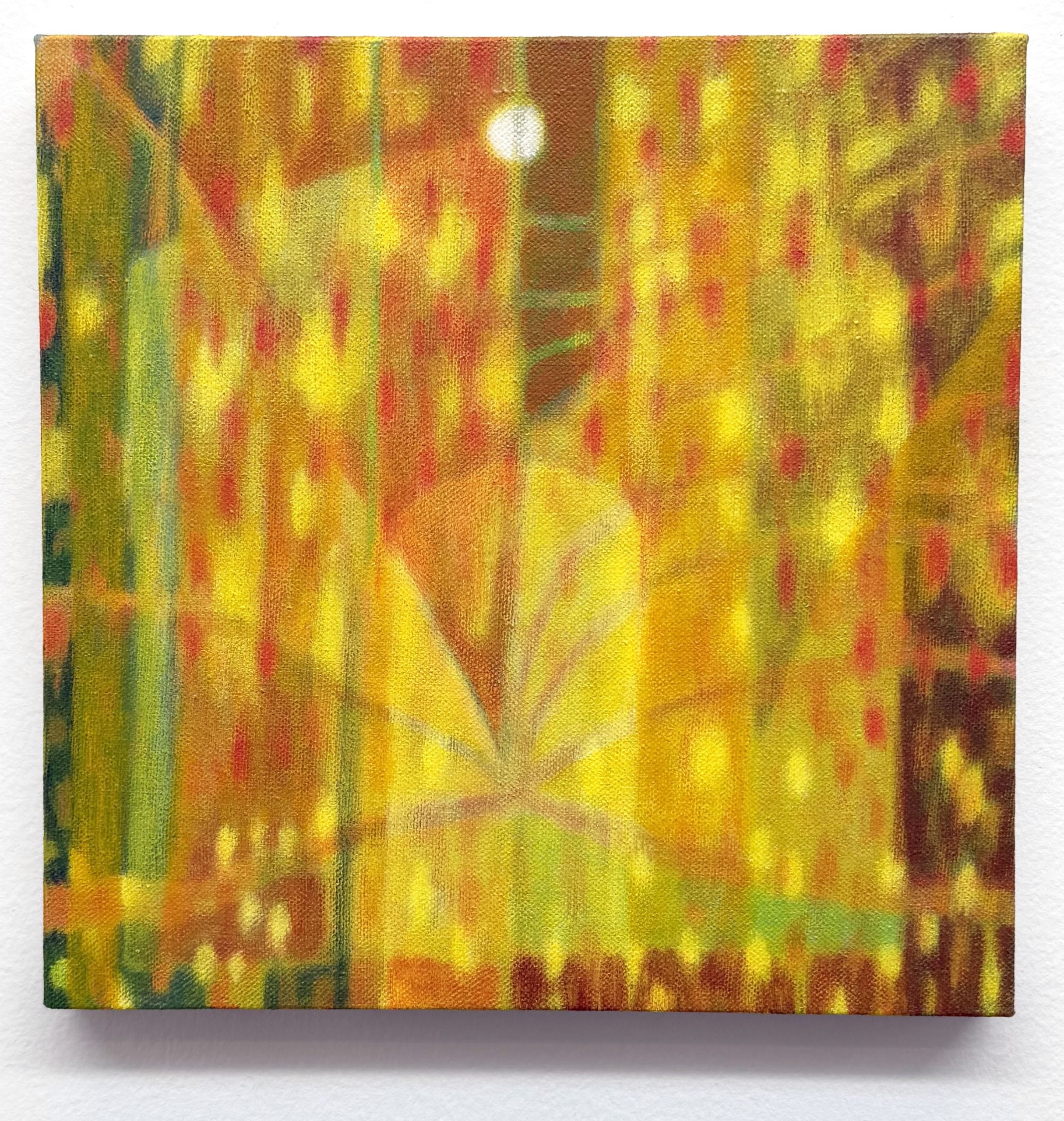
At the time that I was working on it, I had been reading about plants and plant intelligence in a book called “The Light Eaters,” by Zoe Schlanger, and I became captivated by the process of photosynthesis, in which plants absorb and restructure the immaterial energy of sunlight to produce chemical energy (glucose) within their bodies. I felt very drawn to this primordial desire and necessity for light, energy, and radiance, which inter-exists between plants and all other life forms.
I’m always drawing connections between things in my ‘outer environment’ and my ‘inner world’ of painting… and I noticed that (like plants) paintings are their own form of an open system that rely on light, energy, and radiance in order to become, in order to have presence among us. I think I wanted to touch those reflections in some small way within this work.
How did you create it?
I always work very instinctually, and for this particular painting, I didn’t follow a sketch or any predetermined composition; I had a handful of connections, visions, and sensations that I used to guide my decisions as I was making it. My paintings are composed of many layers of chromatic light (color) that vary in touch, value, and opacity, building up a very dense surface paint. I find the sense of depth and density very entrancing, especially when it is offset by flatter forms and spaces within the same painting. Illumination and obscurity are optical tools that I use throughout the process of painting to create spatial ambiguities that register more slowly in our eyes and our minds. I think one of the joys of painting is the ability to play with perception.
What do you hope viewers take away from your exhibition?
It is my hope that in an age of deep urgency and uncertainty, these paintings offer a gentle opportunity to slow down and to slip into our senses for moments of presence, revelation, and beauty.