Kaplan receives grant to examine ways to better utilize NAEP data to forecast educational trends
Kaplan is the Patricia Busk Professor of Quantitative Methods with the School of Education’s No. 1-ranked Department of Educational Psychology. The grant, worth $165,000, is from the U.S. Department of Education’s National Assessment of Educational Progress (NAEP) Research and Development Program.
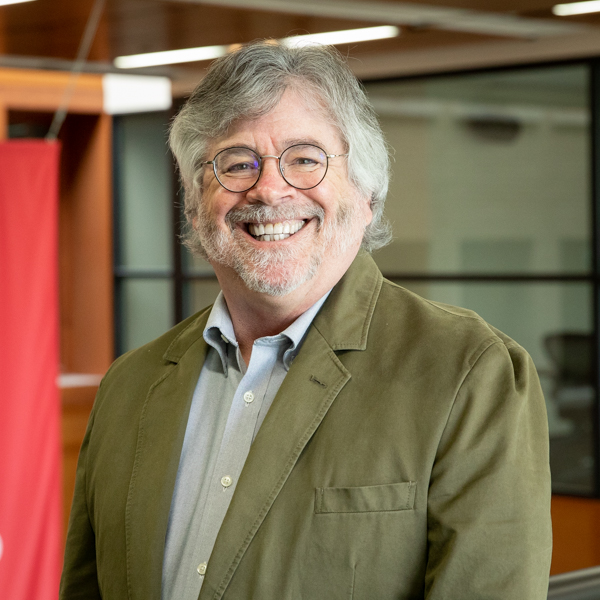
Kaplan is an expert in the field of quantitative methodology, with a focus on the application and development of quantitative methods for problems in large-scale educational assessments. He is the author of the 2014 book, “Bayesian Statistics for the Social Sciences.”
Kaplan’s newly funded project concerns the critically important problem of monitoring of trends in education outcomes over time. One of the United Nations’ Sustainable Development Goals focuses on quality education for all.
At the international level, for example, the Program for International Student Assessment (PISA) and TIMSS/PIRLS, provide information that can be used to forecast movement toward the goals set by the United Nations.
Similarly, in the United States NAEP can provide important monitoring and forecasting information regarding population-level academic performance. In particular, state NAEP assessments provide trend information across the 50 states and jurisdictions, and is a rich source of information for developing forecasting models.
The purpose of this project is to develop a “proof-of-concept” so that state NAEP assessments can be used as panel data to specify cross-state growth regressions, and to develop optimally predictive Bayesian probabilistic projection models that can be used to forecast trends across states in important educational outcomes — such as gender and race/ethnicity equity in educational achievement.
“Large-scale assessments such as NAEP are not being sufficiently exploited for the purposes for which they were created — namely, monitoring population trends,” says Kaplan. “My hope is that the advancements developed in this proposal will demonstrate the richness of policy information that can be obtained when using Bayesian prediction models to study educational trends at the population level.”