For more than a decade, scholars from UW–Madison, Peking University, and beyond have come together to examine some of the most urgent challenges facing higher education around the world.
Founded in 2015 by Adam Nelson (UW–Madison) and Shen Wenqin (Peking University), the UW–PKU Workshop on Higher Education is a premier international forum that’s one of the most active and sustained collaborations between the United States and China on the comparative history, sociology, and politics of higher education — an area of increasing policy relevance.
“I think there’s a recognition that in the world today, conversation and collaboration between scholars in China and the United States is not only very important — it might be of the utmost importance,” says Nelson, the John L. Thomas (WARF) Professor and Vilas Distinguished Achievement Professor of Educational Policy Studies and History at UW–Madison.
“This workshop allows us to come together with some of the best scholars from across the world in a way we wouldn’t if we only stayed in China,” says Shen, an associate professor of higher education with Peking University’s Graduate School of Education. Shen was a visiting scholar at UW–Madison during the 2013-14 academic year.
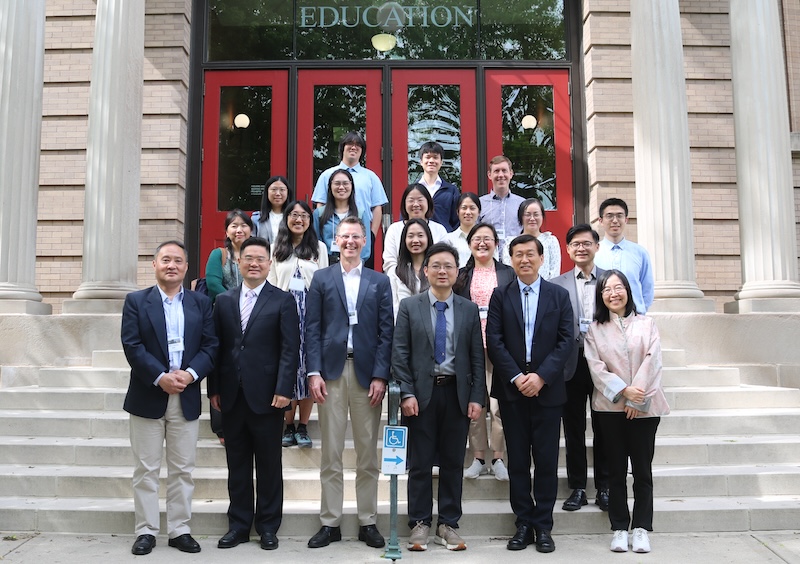
The workshop — which draws scholars from across the United States, China and other countries — alternates between Madison and Beijing. This May, the most recent interaction was hosted on the UW–Madison campus, with about 30 invited participants focused on this year’s workshop theme of: “Academic Internationalism in Turbulent Times.”
During a break in this year’s workshop, which ran May 18-19, Nelson and Shen took time to discuss the history of the event and its value to those attending.
Following is an edited Q&A:
How did the two of you first meet?
Nelson: I made my first trip to China in 2007. Before that trip, I emailed Wenqin out of the blue. I said something like, “Hello, we are both historians of higher education, I would love to meet you.” And he was kind enough to meet me and we realized we were of similar minds.
Shen: China requires faculty members to have international experience as part of the tenure review process, and the government has funding to sponsor time for us abroad. So after meeting Adam, I applied and then received funding to come to the United States and UW–Madison (in 2013).
How did the workshop get started back in 2015? What was it that made people at UW–Madison and Peking University say this is something we need to do?
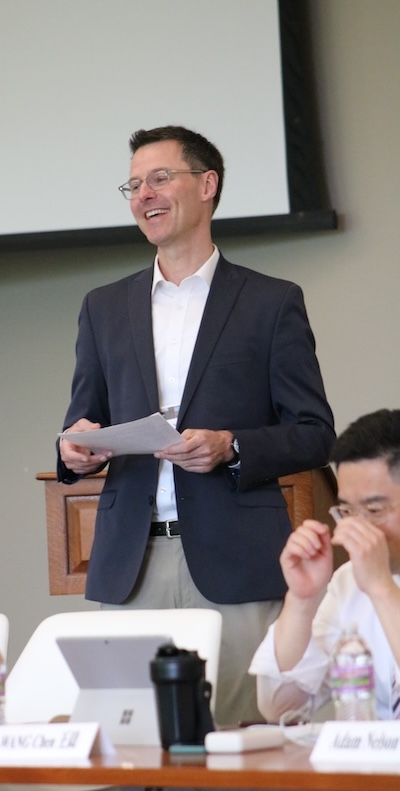
Shen: In 2015 Adam got a small amount of funding for a small workshop, and Adam asked if I wanted to do it in China, and I said, “Sure.” It was a very good opportunity to start engaging with more international scholars. That first event was very successful and we immediately started looking to the future to do this more often.
Nelson: The conversation we’re having today is due to the conversations we started before 2015 — and it has continued due to the success of that first meeting of scholars. Over the years, it has included people from many universities in China and many in America (Vanderbilt, Stanford, and the State University of New York System, to name a few).
What is it about these workshops that has consistently made so many people say, “I want to be a part of this?”
Shen: Adam’s leadership has been outstanding. He organizes very well and invites good papers, and he got some very important people from the United States to come to China. And inside China, there is a very strong desire to get our work out there and have good discussions. People were highly engaged. With the success of the first workshop it made sense to have more.
Nelson: I think people understood the importance of the meeting. At institutions like UW–Madison, we prepare leaders for the future across all fields of academic expertise — whether it’s in the natural sciences or the social sciences or the humanities. We attract students who are likely to lead in the future, and workshops like this are one small way we can provide global perspectives that can help our students — and societies — prepare for a more cooperative, collaborative future, even as we understand our differences.
The workshop alternated between Madison and Beijing through 2019 — when about 200 people attended, including then-UW–Madison Chancellor Rebecca Blank. But COVID shut down everything in 2020. When did you restart and how hard was it to get going again?
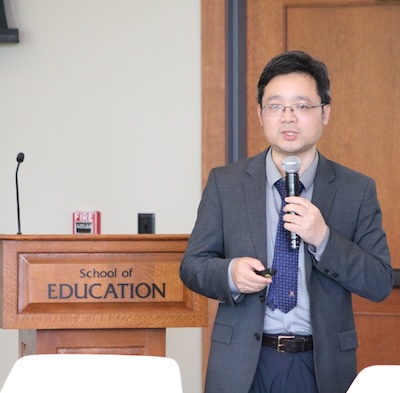
Shen: It wasn’t until 2024 that we really talked about restarting. It wasn’t until 2025 when we got together again in Beijing.
Nelson: I would attribute our restart to Wenqin’s leadership. He really brought us back together — and the enthusiasm was rekindled.
What do you learn from a conference like this that you wouldn’t learn from only collaborating with scholars within China or just with scholars within the United States?
Shen: In China, we have a lot of very big conferences. But people have just 15 minutes to talk about their work — and there is no time for discussion. During our UW-PKU workshops we have very deep discussions for each paper. We learn how to present ideas and make stronger arguments. And then the American perspective and Chinese perspective — getting international dialogue — is incredibly valuable. We learn with some of the best scholars from across the world in a way we wouldn’t if we only stayed in China.
Nelson: I am not an expert on China. But over these years my own work, which is about the history of higher education in the United States, has been deepened, broadened, and enriched tremendously by what I have learned from colleagues in China about the different perspectives on higher education development over long periods of time. You know, we have a very short national history in the United States. Our colleagues in China have a much, much longer history. And for me, as a historian, that’s incredibly valuable.
I’ll add that while those who attend the workshop are all studying higher education, we bring different disciplinary expertise and perspectives. We have historians and sociologists and economists and people who are oriented toward political science and anthropology. All of these perspectives have enriched our discussions.
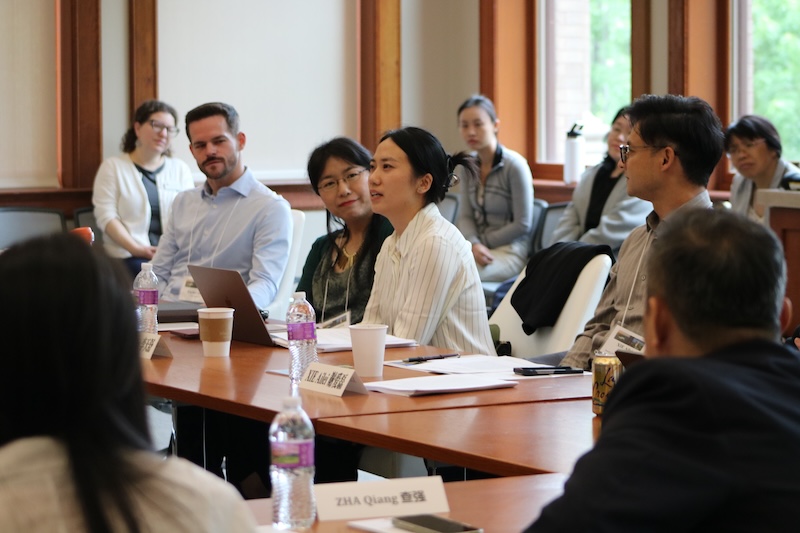
The theme of this year’s event is: Academic Internationalism in Turbulent Times. These do seem like turbulent times.
Shen: The world today is different than in 2019. There are different geopolitical tensions between countries. But we all agree we should be working together, across many dimensions, to make the world a better place.
Nelson: It’s important to have conversations where we interact explicitly and implicitly around our values with respect to internationalism. We hope we are setting an example for others to always keep conversations open and ongoing.
Are you hopeful for the future of this workshop? Will you be meeting in Beijing next year?
Shen: Yes, I’m very hopeful. We plan to have everyone come to PKU next year.
Nelson: I’m already looking forward to it. It’s the highlight of my academic year.